
Marquesas palm
Pelagodoxa henryana
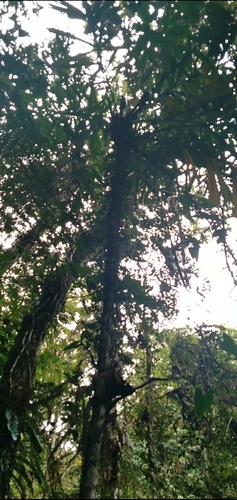
Photo: Wikimedia Commons (CC) via https://en.wikipedia.org/wiki/Pelagodoxa_henryana
Overview
Pelagodoxa henryana is a species of palm tree. It is native to French Polynesia, where it survives on Nuku Hiva in the Marquesas Islands. A population on Raivavae in the Tubuai Islands is presumed extinct. The species is threatened by habitat loss.
Pelagodoxa henryana, endemic to the Marquesas Islands in French Polynesia, faces severe threats from habitat destruction and invasive species. The species' extremely limited range makes it particularly vulnerable to local disturbances, with introduced herbivores and habitat conversion for agriculture being primary concerns. Climate change and sea level rise pose additional long-term threats to this critically endangered palm.
Habitat
The plant was described by Odoardo Beccari in 1917, from seeds, notes, and photographs gathered on Fatu Hiva by Charles Henry in 1916, likely in the Taipivai Valley. The trees grow in disturbed lowland rain forest near the Teuakueenui waterfall. In 2012 a second population was discovered in the Hatihe'u valley. Both populations are from 140 to 300 meters elevation in lowland wet forest dominated...
Other threatened species in Arecaceae
Threatened in Brazil


Frequently asked questions
Why is Marquesas palm classified as Critically Endangered?
Where does Marquesas palm live?
What are the main threats to Marquesas palm?
Get weekly conservation intelligence
One short digest a week of the most striking species and country data we ship, plus breaking conservation news paired with our database where it matters.
Free, no spam. One-click unsubscribe in every email.