
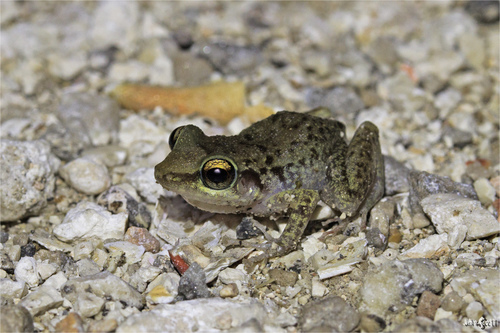
Guanahacabibes Frog
Eleutherodactylus guanahacabibes
Photo: Wikimedia Commons (CC) via https://en.wikipedia.org/wiki/Eleutherodactylus_guanahacabibes
Overview
Eleutherodactylus guanahacabibes is a species of frogs in the family Eleutherodactylidae endemic to Cuba, and is named for the Guanahacabibes Peninsula. Its natural habitats are subtropical or tropical moist lowland forest, rocky areas, and caves. It is threatened by habitat loss.
The Guanahacabibes Frog faces severe threats from habitat loss and degradation due to agricultural expansion, tourism development, and infrastructure projects within its extremely limited range on the Guanahacabibes Peninsula. Climate change poses additional risks through altered precipitation patterns and increased storm intensity, which can disrupt the species' breeding cycles and microhabitat conditions.
Other threatened species in Eleutherodactylidae

Threatened in Cuba

Frequently asked questions
Why is Guanahacabibes Frog classified as Endangered?
Where does Guanahacabibes Frog live?
What are the main threats to Guanahacabibes Frog?
Get weekly conservation intelligence
One short digest a week of the most striking species and country data we ship, plus breaking conservation news paired with our database where it matters.
Free, no spam. One-click unsubscribe in every email.