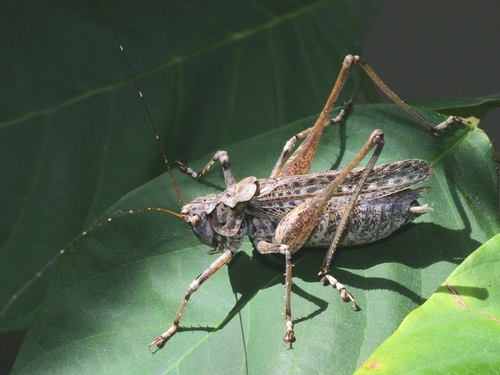
Gran Canaria Bush-cricket
Evergoderes cabrerai
Photo: Photo: (c) Cabrerai, some rights reserved (CC BY-NC), uploaded by Cabrerai
Overview
The Gran Canaria bush-cricket (Evergoderes cabrerai) is a small, flightless orthopteran endemic to the island of Gran Canaria in the Canary Islands, Spain. Like other members of its genus, it has a robust, wingless or short-winged body adapted for life among rocks and vegetation rather than flight, with strong hind legs suited to jumping and a coloration that blends with volcanic substrate and dry scrub. It is classified as Critically Endangered (CR) on the IUCN Red List, reflecting an extremely restricted range and a population that continues to decline.
The species is confined to a narrow band of native shrubland and rocky ravine habitat on the island, an ecosystem already reduced by decades of agricultural expansion, urban development, and infrastructure projects tied to tourism growth along the Canarian coast and highlands. Because Evergoderes cabrerai cannot fly and disperses poorly, populations are highly fragmented, leaving isolated colonies vulnerable to local extinction from a single disturbance event, such as fire, quarrying, or further habitat clearance. Invasive predators and altered vegetation communities, including the spread of non-native plants that outcompete the native scrub the species depends on for food and shelter, add further pressure.
Its narrow endemism and low mobility mean that even small-scale habitat loss can have outsized effects on the species' long-term persistence. On a more encouraging note, growing recognition of Gran Canaria's unique invertebrate fauna has prompted increased survey effort and inclusion of the island's endemic arthropods in regional conservation planning, and portions of its known range fall within areas subject to habitat protection measures under Canarian and EU environmental frameworks. Continued monitoring and targeted habitat management in these zones offer a realistic pathway to stabilizing remaining populations, provided further land conversion in its remaining strongholds is avoided.
Evergoderes cabrerai faces severe threats from habitat destruction due to agricultural expansion and urban development in its limited range. The species' extremely restricted distribution makes it particularly vulnerable to localized environmental changes and human activities. Mining operations and infrastructure development pose additional pressures on the remaining suitable habitat patches.
Habitat
This species inhabits specific microhabitats within temperate grasslands and scrublands, typically associated with particular soil types and vegetation communities. It requires undisturbed areas with appropriate moisture levels and substrate conditions for survival and reproduction.
Conservation measures underway
Other threatened species in TETTIGONIIDAE
Threatened in Spain
Frequently asked questions
Why is Gran Canaria Bush-cricket classified as Critically Endangered?
Where does Gran Canaria Bush-cricket live?
What are the main threats to Gran Canaria Bush-cricket?
Get weekly conservation intelligence
One short digest a week of the most striking species and country data we ship, plus breaking conservation news paired with our database where it matters.
Free, no spam. One-click unsubscribe in every email.