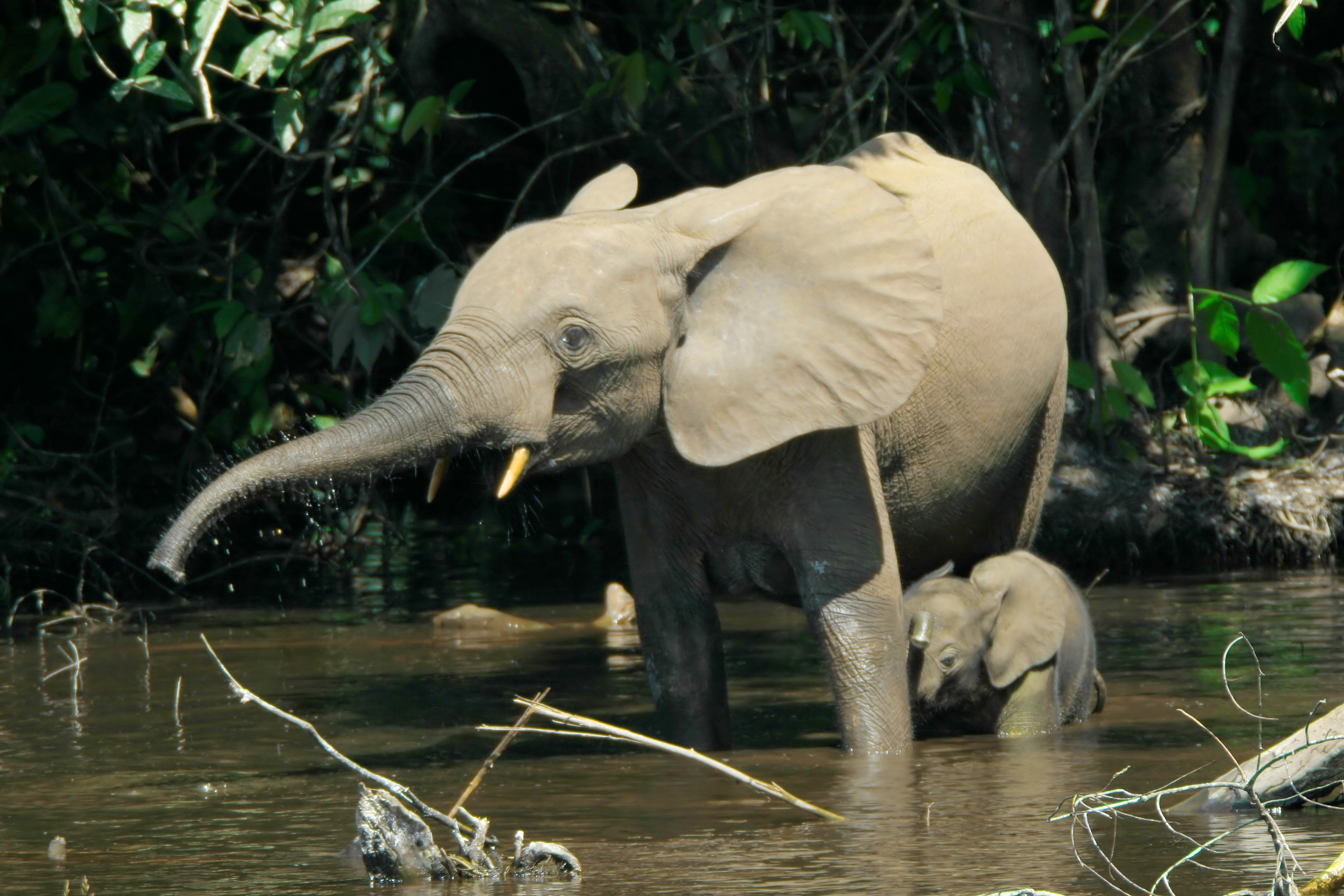
African Forest Elephant
Loxodonta cyclotis
Photo: Photo: Wikimedia Commons, CC BY-SA
Overview
The African forest elephant is an elephant species native to humid tropical forests in West Africa and the Congo Basin. It was first described in 1900. With an average shoulder height of 2.16 m, it is the smallest of the three extant elephant species. Both sexes have straight, down-pointing tusks, which begin to grow at the age of 1–3 years.
African forest elephants face catastrophic population declines primarily due to intensive poaching for ivory, which has reduced their numbers by over 80% in the past decade. Habitat fragmentation from logging, agricultural expansion, and infrastructure development has isolated remaining populations and reduced available forest corridors. Mining operations and human settlements continue to encroach on their remaining forest habitat, while civil unrest in parts of their range has hampered conservation efforts.
Habitat
African forest elephants inhabit dense tropical rainforests across Central and West Africa, including both primary and secondary forest ecosystems. They require large territories with forest corridors connecting feeding areas, and play a crucial role as seed dispersers in maintaining forest biodiversity.
Conservation measures underway
Other threatened species in ELEPHANTIDAE

Threatened in Angola



Frequently asked questions
Why is African Forest Elephant classified as Critically Endangered?
Where does African Forest Elephant live?
What are the main threats to African Forest Elephant?
Get weekly conservation intelligence
One short digest a week of the most striking species and country data we ship, plus breaking conservation news paired with our database where it matters.
Free, no spam. One-click unsubscribe in every email.