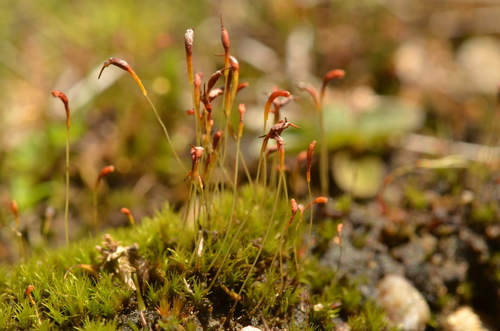
Trematodon brevicollis
Local name: fjälltranmossa
Overview
A detailed profile for this species is sourced from the IUCN Red List of Threatened Species as assessments become available.
Fjälltranmossa faces significant pressure from climate change as warming temperatures alter the cold, humid conditions essential for its survival in alpine environments. Habitat degradation from increased recreational activities and infrastructure development in mountain regions further fragments its already limited populations. The species' specialized ecological requirements and slow growth rate make it particularly vulnerable to rapid environmental changes.
Habitat
This moss species inhabits cold, humid alpine and subalpine environments, typically growing on soil, rocks, and decaying organic matter in mountainous regions. It requires specific moisture conditions and cool temperatures found at higher elevations in northern European mountain systems.
Other threatened species in Bruchiaceae
Threatened in Austria

Frequently asked questions
Why is fjälltranmossa classified as Vulnerable?
Where does fjälltranmossa live?
What are the main threats to fjälltranmossa?
Get weekly conservation intelligence
One short digest a week of the most striking species and country data we ship, plus breaking conservation news paired with our database where it matters.
Free, no spam. One-click unsubscribe in every email.