
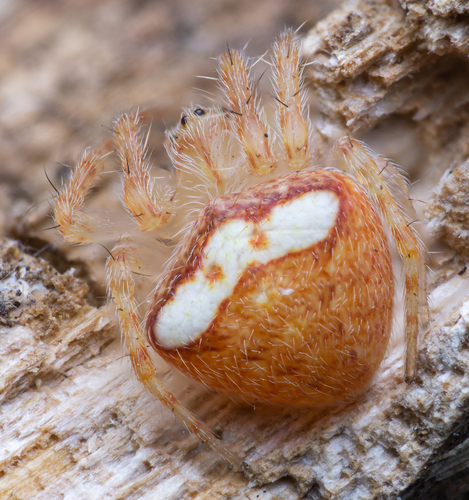
Orange Wheelweaving Spider
Araneus alsine
Photo: Wikimedia Commons (CC) via https://en.wikipedia.org/wiki/Araneus_alsine
Overview
Araneus alsine, the strawberry spider or orange wheelweaving spider, is a species of the orb-weaving spider family, Araneidae.
Épeire alsine faces significant threats from habitat degradation and fragmentation of its specialized wetland environments. Climate change and human development pressures are reducing the availability of suitable marshy habitats where this orb weaver spider constructs its webs, while pollution from agricultural runoff further degrades water quality in remaining suitable areas.
Habitat
This species inhabits marshy areas, wetland margins, and riparian zones with dense vegetation, particularly areas with reeds and tall grasses near water bodies. It constructs its orb webs among emergent vegetation in these moisture-rich environments, typically at low to moderate elevations.
Other threatened species in Araneidae

Threatened in Åland Islands


Frequently asked questions
Why is Orange Wheelweaving Spider classified as Vulnerable?
Where does Orange Wheelweaving Spider live?
What are the main threats to Orange Wheelweaving Spider?
Get weekly conservation intelligence
One short digest a week of the most striking species and country data we ship, plus breaking conservation news paired with our database where it matters.
Free, no spam. One-click unsubscribe in every email.