
Ecuadorian Piedtail
Phlogophilus hemileucurus
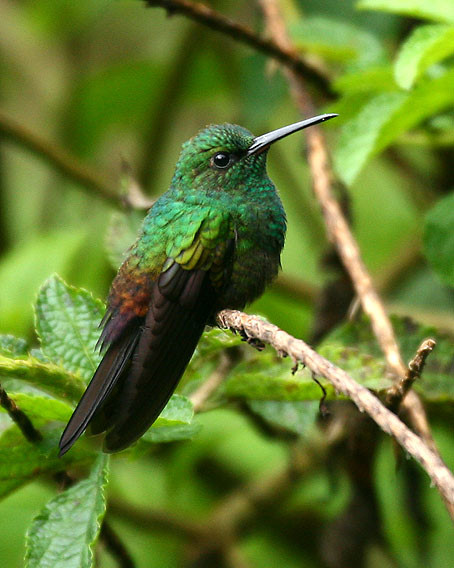
Photo: Wikimedia Commons (CC) via https://en.wikipedia.org/wiki/Ecuadorian_piedtail
Overview
The Ecuadorian piedtail is a species of hummingbird in the "coquettes", tribe Lesbiini of subfamily Lesbiinae. It is found in Colombia, Ecuador, and Peru.
The Ecuadorian Piedtail faces significant threats from habitat loss and fragmentation due to deforestation, agricultural expansion, and human settlement in its limited Andean cloud forest range. Climate change poses additional risks by altering the temperature and moisture conditions of its specialized high-altitude habitat. The species' restricted geographic range makes it particularly vulnerable to these environmental pressures.
Habitat
Inhabits humid montane cloud forests and forest edges in the Andes, typically at elevations between 1,200-2,400 meters. Prefers areas with dense vegetation, epiphytes, and abundant flowering plants that provide nectar sources.
Other threatened species in Trochilidae



Frequently asked questions
Why is Ecuadorian Piedtail classified as Vulnerable?
Where does Ecuadorian Piedtail live?
What are the main threats to Ecuadorian Piedtail?
Get weekly conservation intelligence
One short digest a week of the most striking species and country data we ship, plus breaking conservation news paired with our database where it matters.
Free, no spam. One-click unsubscribe in every email.