
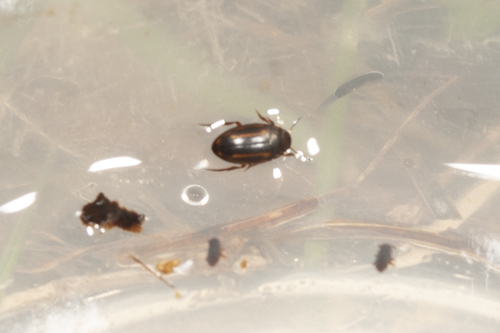
Wasp Great Diving-beetle
Dytiscus circumflexus
Photo: iNaturalist: (c) John P, some rights reserved (CC BY-NC), uploaded by John P
Overview
Dytiscus circumflexus is a large predatory diving beetle characterized by its distinctive oval-shaped body and the characteristic accent-like markings that give it its common name. These aquatic beetles are powerful swimmers with streamlined bodies and serve as important predators in freshwater ecosystems, controlling populations of smaller aquatic invertebrates and occasionally small fish.
Dytiscus circumflexus faces severe population declines primarily due to habitat loss and degradation of its freshwater pond and wetland ecosystems. Agricultural intensification, urban development, and water pollution have dramatically reduced the availability of suitable breeding and foraging habitats. Climate change and altered hydrological patterns further threaten the remaining fragmented populations of this critically endangered diving beetle.
Habitat
Dytiscus circumflexus inhabits clean, well-oxygenated freshwater bodies including pristine ponds, slow-moving streams, and the shallow margins of lakes with abundant aquatic vegetation. The species requires waters with stable temperatures and minimal chemical pollution to complete its complex aquatic life cycle.
Other threatened species in Dytiscidae
Frequently asked questions
Why is Wasp Great Diving-beetle classified as Critically Endangered?
Where does Wasp Great Diving-beetle live?
What are the main threats to Wasp Great Diving-beetle?
Get weekly conservation intelligence
One short digest a week of the most striking species and country data we ship, plus breaking conservation news paired with our database where it matters.
Free, no spam. One-click unsubscribe in every email.