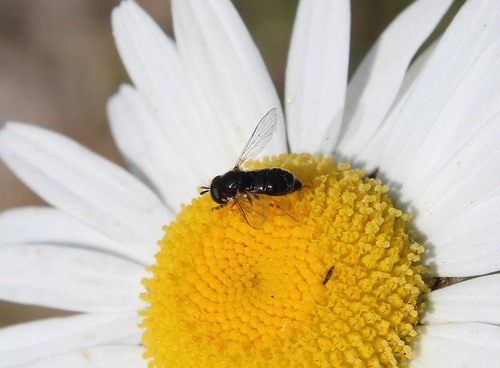
Paragus constrictus
Photo: iNaturalist: (c) o_beckett98, all rights reserved, uploaded by o_beckett98
Overview
Paragus constrictus is a species of hoverfly. It is found in Southern Sweden and Denmark, Ireland, Spain, Germany, the French Alps, Switzerland, Austria, Italy, Yugoslavia and Turkey and Russia east of the Urals. This species may be distinguished from Paragus tibialis only by the shape of the male parameres.
In both sexes it shares with P. tibialis the character of entirely pale-haired abdominal tergites, so it is distinct from Paragus haemorrhous which has dark hairs. Images representing Paragus constrictus
Paragus constrictus faces significant threats from habitat loss and degradation due to agricultural intensification and urbanization across its range. The species' dependence on specific flowering plants for nectar and particular host plants for larval development makes it particularly vulnerable to changes in plant community composition and the widespread use of pesticides.
Habitat
This hoverfly species inhabits flower-rich grasslands, meadows, and agricultural margins, particularly favoring areas with diverse wildflower communities and traditional extensive farming systems. Adults require nectar sources from various flowering plants while larvae develop as predators of aphids on herbaceous vegetation.
Other threatened species in Syrphidae


Threatened in Åland Islands


Frequently asked questions
Why is Paragus constrictus classified as Vulnerable?
Where does Paragus constrictus live?
What are the main threats to Paragus constrictus?
Get weekly conservation intelligence
One short digest a week of the most striking species and country data we ship, plus breaking conservation news paired with our database where it matters.
Free, no spam. One-click unsubscribe in every email.