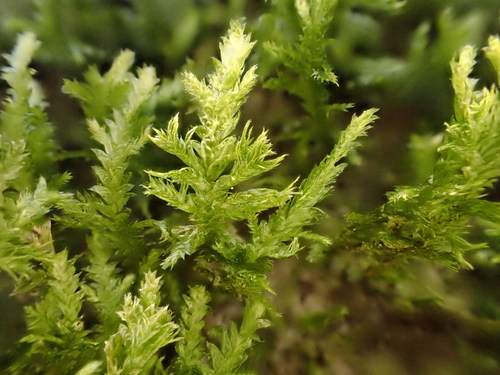
Dwarf Neckera
Neckera pumila
Photo: iNaturalist: (c) Stefan Gey, some rights reserved (CC BY-NC), uploaded by Stefan Gey
Overview
Dwarf Neckera is a small, delicate moss species characterized by its flattened, feather-like branching pattern and glossy, dark green appearance. This bryophyte forms loose, spreading mats on tree bark and rock surfaces, playing an important ecological role in forest ecosystems by providing microhabitat for invertebrates and contributing to nutrient cycling through moisture retention and organic matter decomposition.
Dwarf Neckera faces significant threats from habitat loss and degradation due to deforestation, urbanization, and changes in forest management practices that alter the microclimate conditions essential for this moss species. Air pollution and climate change further threaten its specialized epiphytic habitat requirements, while the species' limited dispersal ability makes it particularly vulnerable to local extinctions.
Habitat
Dwarf Neckera grows as an epiphyte on tree bark in humid deciduous and mixed forests, particularly favoring older trees with stable bark surfaces. The species requires consistent moisture levels and is typically found in shaded forest environments with high humidity and minimal air pollution.
Other threatened species in Neckeraceae

Frequently asked questions
Why is Dwarf Neckera classified as Vulnerable?
Where does Dwarf Neckera live?
What are the main threats to Dwarf Neckera?
Get weekly conservation intelligence
One short digest a week of the most striking species and country data we ship, plus breaking conservation news paired with our database where it matters.
Free, no spam. One-click unsubscribe in every email.