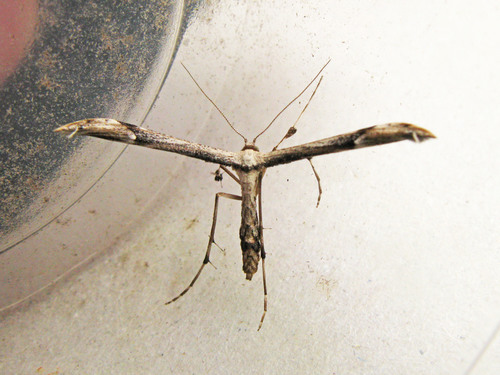
Dusky Plume
Oidaematophorus lithodactyla
Photo: iNaturalist: (c) richardjaybee, some rights reserved (CC BY-NC), uploaded by richardjaybee
Overview
Oidaematophorus lithodactyla, also known as the dusky plume, is a moth of the family Pterophoridae found from Europe to Asia Minor and Japan. It was first described by German lepidopterist, Georg Friedrich Treitschke in 1833.
The Dusky Plume faces significant pressure from habitat fragmentation and the loss of its specific host plants due to agricultural intensification and urban development. Climate change poses an additional threat by altering the phenology of both the moth and its larval food sources, potentially disrupting critical breeding cycles. Increased use of pesticides in surrounding agricultural areas further compounds population declines through direct mortality and reduced reproductive success.
Habitat
This species inhabits rocky outcrops, limestone cliffs, and sparse grasslands where its larval host plants thrive in well-drained, calcareous soils. Adults are typically found in areas with scattered shrubs and herbaceous vegetation that provide both nectar sources and shelter from wind exposure.
Other threatened species in Pterophoridae


Threatened in Åland Islands


Frequently asked questions
Why is Dusky Plume classified as Endangered?
Where does Dusky Plume live?
What are the main threats to Dusky Plume?
Get weekly conservation intelligence
One short digest a week of the most striking species and country data we ship, plus breaking conservation news paired with our database where it matters.
Free, no spam. One-click unsubscribe in every email.