Dunlin
ENEndangered

Dunlin

Calidris alpina

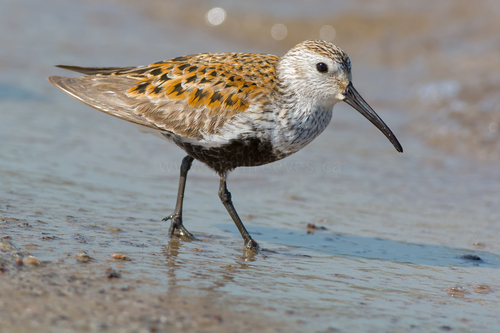
**Dunlin (Calidris alpina)** The Dunlin is a small sandpiper measuring 16-22 cm in length, characterized by its slightly curved black bill and distinctive breeding plumage featuring a black belly patch. During winter, these birds display gray-brown upperparts and white underparts.

167

Countries

Photo: iNaturalist: (c) Paul Reeves, some rights reserved (CC BY-NC-SA), uploaded by Paul Reeves

01Classification

Taxonomy & Classification

Kingdom

Animalia

Phylum

Chordata

Class

Aves

Order

Charadriiformes

Family

Scolopacidae

Genus

Calidris

Dunlin belongs to the family Scolopacidae, order Charadriiformes, within the Aves class.

02Description

Species Profile

**Dunlin (Calidris alpina)** The Dunlin is a small sandpiper measuring 16-22 cm in length, characterized by its slightly curved black bill and distinctive breeding plumage featuring a black belly patch. During winter, these birds display gray-brown upperparts and white underparts. Dunlin are highly gregarious, often forming large flocks during migration and winter, creating spectacular murmurations along coastlines. As invertebrate feeders, they probe mudflats and shallow waters for worms, mollusks, and crustaceans, serving as important links in coastal food webs. This species exhibits one of the most extensive global distributions among shorebirds, breeding across Arctic and subarctic tundra in Alaska, northern Canada, Greenland, Scandinavia, and Russia. During non-breeding seasons, Dunlin migrate to temperate and tropical coastlines worldwide, utilizing estuaries, mudflats, sandy beaches, and salt marshes across six continents. The species faces mounting pressures from habitat loss due to coastal development, sea-level rise, and wetland drainage. Climate change threatens Arctic breeding grounds through altered precipitation patterns and vegetation changes. Disturbance at critical stopover sites during migration poses additional stress, while pollution and reduced prey availability in coastal areas impact feeding success. Conservation efforts focus on protecting key staging areas through international flyway initiatives and establishing marine protected areas. Habitat restoration projects target degraded coastal wetlands, while monitoring programs track population trends across breeding and wintering ranges. Despite its wide distribution, the Dunlin's classification as Endangered reflects significant population declines in several regions. The species' dependence on increasingly threatened coastal and Arctic habitats suggests continued challenges ahead, making coordinated international conservation efforts essential for long-term survival.

Dunlin populations are declining primarily due to habitat loss and degradation of coastal wetlands, tidal mudflats, and breeding grounds from climate change, sea level rise, and human development. Agricultural intensification and changes in land use practices in breeding areas have further reduced suitable nesting habitat, while pollution and disturbance at stopover sites compound these pressures.

Key Facts

IUCN StatusEndangered (EN)
GroupBirds
03Habitat

Habitat & Distribution

FRESHWATERMajorMARINEMajorTERRESTRIALMajorTERRESTRIALMajor
04Threats

Threats

!

IUCN Red List: Endangered

Dunlin populations are declining primarily due to habitat loss and degradation of coastal wetlands, tidal mudflats, and breeding grounds from climate change, sea level rise, and human development. Agricultural intensification and changes in land use practices in breeding areas have further reduced suitable nesting habitat, while pollution and disturbance at stopover sites compound these pressures.

Agricultural intensification in breeding areas

HighOngoing

Climate change affecting breeding and wintering grounds

HighOngoing

Coastal habitat loss from sea level rise and development

HighOngoing

Wetland drainage and conversion

HighOngoing

Pollution and disturbance at stopover sites

MediumOngoing
06Range

Found in 167 Countries

AfghanistanÅland IslandsAlbaniaAlgeriaAngolaArgentinaArmeniaAustraliaAustriaAzerbaijanBahamasBahrainBangladeshBarbadosBelarusBelgiumBelizeBermudaBosnia & HerzegovinaBritish Indian Ocean TerritoryBulgariaCameroonCanadaCape VerdeCaribbean NetherlandsCayman IslandsChinaColombiaCongo - BrazzavilleCosta RicaCôte d’IvoireCroatiaCubaCuraçaoCyprusCzechiaDenmarkDjiboutiDominican RepublicEcuadorEgyptEl SalvadorEritreaEstoniaEthiopiaFaroe IslandsFinlandFranceFrench GuianaGambiaGeorgiaGermanyGhanaGibraltarGreeceGreenlandGuadeloupeGuamGuatemalaGuernseyGuineaGuinea-BissauHong Kong SAR ChinaHungaryIcelandIndiaIndonesiaIranIraqIrelandIsle of ManIsraelItalyJamaicaJapanJerseyJordanKazakhstanKenyaKosovoKuwaitKyrgyzstanLaosLatviaLebanonLibyaLithuaniaLuxembourgMacao SAR ChinaMadagascarMalaysiaMaldivesMaliMaltaMarshall IslandsMartiniqueMauritaniaMexicoMicronesiaMoldovaMongoliaMontenegroMoroccoMyanmar (Burma)NamibiaNepalNetherlandsNew ZealandNicaraguaNigerNigeriaNorth KoreaNorth MacedoniaNorthern Mariana IslandsNorwayOmanPakistanPalestinian TerritoriesPanamaParaguayPhilippinesPolandPortugalPuerto RicoQatarRomaniaRussiaSaudi ArabiaSenegalSerbiaSeychellesSierra LeoneSingaporeSlovakiaSloveniaSomaliaSouth AfricaSouth Georgia & South Sandwich IslandsSouth KoreaSpainSri LankaSt. Kitts & NevisSt. Pierre & MiquelonSudanSvalbard & Jan MayenSwedenSwitzerlandSyriaTaiwanTajikistanThailandTunisiaTürkiyeTurkmenistanTurks & Caicos IslandsU.S. Outlying IslandsU.S. Virgin IslandsUgandaUkraineUnited Arab EmiratesUnited KingdomUnited StatesUzbekistanVenezuelaVietnamWestern SaharaYemen
07National Status

National vs Global Threat Status

How this species is assessed at the national level compared to its IUCN global status (EN).

CountryNational StatusGlobal StatusComparison
EULCLeast ConcernENEndangeredLower local risk

National Red List data sourced from the National Red List Project (nationalredlist.org, ZSL) and country-specific Red List authorities.

Community

Community Sightings

Report a sighting

No community sightings yet. Be the first to report!

07Sources

Sources & Attribution

How to Cite

IUCN: IUCN (2025). The IUCN Red List of Threatened Species. Version 2025-1. Available at: https://www.iucnredlist.org. doi:10.2305/IUCN.UK.2025-1.RLTS

GBIF: GBIF.org (2025). GBIF Home Page. Available at: https://www.gbif.org

National Red Lists: ZSL (2025). National Red List. Zoological Society of London. Available at: https://www.nationalredlist.org

This page: SpeciesRadar (2025). Dunlin (Calidris alpina). SpeciesRadar: Intelligence for Earth's Biodiversity. Available at: https://speciesradar.org/species/dunlin

Full citation guide & data usage terms