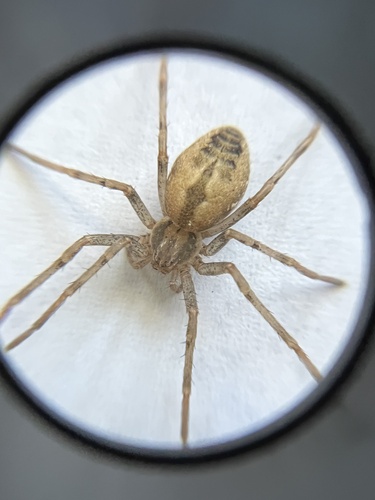
Five-striped Spider
Thanatus striatus
Photo: iNaturalist: (c) quinnm, some rights reserved (CC BY)
Overview
Thanatus striatus is a species of running crab spider in the family Philodromidae. It is found in North America, Europe, Turkey, a range from Russia, and Central Asia.
The duinrenspin faces significant threats from habitat loss due to coastal development and dune stabilization projects that alter its specialized sandy habitat. Climate change and increased storm intensity threaten the fragile dune ecosystems this species depends on, while recreational activities and tourism development further fragment and degrade suitable habitat.
Habitat
Inhabits coastal sand dunes, sandy heathlands, and dry grasslands near shorelines, particularly favoring sparsely vegetated areas with loose sand and low shrub cover. The species is specifically adapted to dynamic dune systems and sandy soils in coastal environments.
Other threatened species in Philodromidae


Threatened in Åland Islands


Frequently asked questions
Why is Five-striped Spider classified as Vulnerable?
Where does Five-striped Spider live?
What are the main threats to Five-striped Spider?
Get weekly conservation intelligence
One short digest a week of the most striking species and country data we ship, plus breaking conservation news paired with our database where it matters.
Free, no spam. One-click unsubscribe in every email.