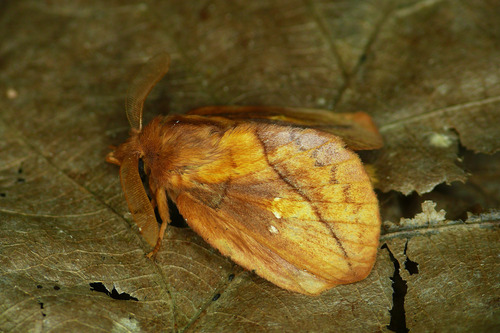
Drinker
Euthrix potatoria
Photo: iNaturalist: (c) Michał Brzeziński, some rights reserved (CC BY-NC), uploaded by Michał Brzeziński
Overview
Euthrix potatoria, the drinker, is an orange-brown moth of the family Lasiocampidae.
The Drinker moth faces significant population declines across its range due to habitat loss and degradation of wetland ecosystems where its larvae depend on sedges and grasses. Agricultural intensification, urban development, and climate change are reducing the availability of suitable breeding habitats, while pollution and altered water regimes further threaten the wet grassland communities this species requires.
Habitat
Wet grasslands, marshes, fens, and boggy areas where sedges, rushes, and coarse grasses grow, typically in lowland regions with high moisture content. The species also occurs in damp meadows, reed beds, and the margins of ponds and slow-moving waterways.
Other threatened species in Lasiocampidae


Threatened in Åland Islands


Frequently asked questions
Why is Drinker classified as Vulnerable?
Where does Drinker live?
What are the main threats to Drinker?
Get weekly conservation intelligence
One short digest a week of the most striking species and country data we ship, plus breaking conservation news paired with our database where it matters.
Free, no spam. One-click unsubscribe in every email.