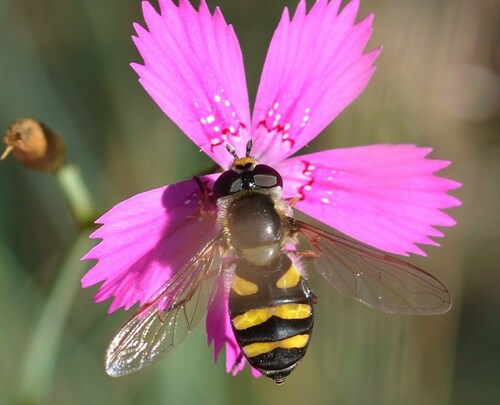
Didea intermedia
Photo: iNaturalist: (c) ernstklimsa, some rights reserved (CC BY-NC)
Overview
Didea intermedia is a medium-sized dipteran fly characterized by its distinctive metallic green thorax and amber-tinted wings with dark banding patterns. This specialized pollinator plays a crucial role in montane ecosystems, serving as a primary pollinator for several endemic alpine flowering plants while also functioning as a key prey species for insectivorous birds during summer months.
Didea intermedia faces significant pressure from habitat loss due to deforestation and agricultural expansion across its range. Climate change is altering precipitation patterns and temperature regimes in its forest habitats, while fragmentation isolates populations and reduces genetic diversity.
Habitat
This species inhabits tropical and subtropical moist forests, particularly in areas with dense canopy cover and high humidity. It is typically found in both primary and secondary forest habitats at elevations ranging from lowlands to mid-montane zones.
Other threatened species in Syrphidae


Threatened in Åland Islands


Frequently asked questions
Why is Didea intermedia classified as Vulnerable?
Where does Didea intermedia live?
What are the main threats to Didea intermedia?
Get weekly conservation intelligence
One short digest a week of the most striking species and country data we ship, plus breaking conservation news paired with our database where it matters.
Free, no spam. One-click unsubscribe in every email.