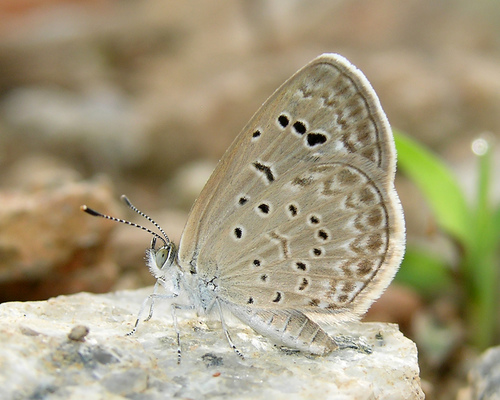
Dark Grass Blue
Zizeeria karsandra
Photo: iNaturalist: (c) Roger Rittmaster, some rights reserved (CC BY), uploaded by Roger Rittmaster
Overview
The Dark Grass Blue is a small butterfly with a wingspan of 18-25mm. Males display bright blue upperwings with narrow dark borders, while females are predominantly brown with blue patches near the wing bases. The underwings of both sexes are pale gray with distinctive black spots ringed in white.
This species exhibits rapid, low flight patterns close to the ground and feeds primarily on nectar from small flowers. As pollinators, they contribute to plant reproduction in their ecosystems, while their caterpillars feed on various leguminous plants.
The Dark Grass Blue demonstrates one of the most extensive distributions among butterfly species, spanning from the Mediterranean through Asia to Australia and the Pacific islands. It inhabits diverse environments including grasslands, agricultural areas, urban gardens, coastal regions, and disturbed habitats up to 2,000 meters elevation. This adaptability has enabled its presence across 47 countries and territories.
Despite its wide range, the species faces mounting pressures from habitat conversion, intensive agricultural practices, and urban development. Climate change may be altering the distribution of suitable habitats, while pesticide use in agricultural areas poses direct threats to both adults and larvae. The fragmentation of grassland habitats reduces breeding opportunities and population connectivity.
Currently, no species-specific conservation programs exist for the Dark Grass Blue. Some populations benefit indirectly from general habitat protection measures and reduced pesticide use in certain regions. However, the lack of comprehensive population monitoring across its range hampers conservation planning.
The species' future remains uncertain. While its adaptability suggests resilience, continued habitat loss and environmental pressures may lead to further population declines without targeted conservation intervention.
The Dark Grass Blue butterfly faces significant population declines primarily due to habitat loss from agricultural expansion and urban development across its range. Grassland conversion and degradation of its preferred open habitats have fragmented populations and reduced available breeding sites.
Other threatened species in Lycaenidae


Threatened in Algeria


Frequently asked questions
Why is Dark Grass Blue classified as Vulnerable?
Where does Dark Grass Blue live?
What are the main threats to Dark Grass Blue?
Get weekly conservation intelligence
One short digest a week of the most striking species and country data we ship, plus breaking conservation news paired with our database where it matters.
Free, no spam. One-click unsubscribe in every email.