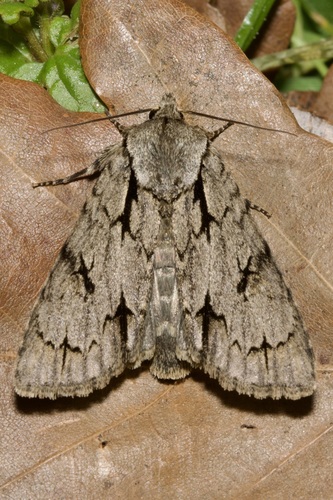
Dark Dagger
Acronicta tridens
Photo: iNaturalist: (c) Gábor Keresztes, some rights reserved (CC BY-NC), uploaded by Gábor Keresztes
Overview
The dark dagger is a moth of the family Noctuidae. The species was first described by Michael Denis and Ignaz Schiffermüller in 1775. It is distributed throughout Europe, Turkey, the Near East, the European part of Russia, southern Siberia, the Ural, the Russian Far East, the Korean Peninsula, China and Japan (Hokkaido).
The Dark Dagger moth faces significant population pressures from habitat loss due to agricultural intensification and urban development, which reduces availability of its host plants and suitable breeding sites. Climate change is altering the timing of larval development and host plant phenology, creating mismatches that affect reproductive success.
Habitat
Occupies deciduous and mixed woodlands, hedgerows, parks, and gardens where host plants including birch, alder, and various fruit trees are present. Adults are attracted to artificial lights and can be found in suburban areas with sufficient vegetation cover.
Other threatened species in Noctuidae

Threatened in Åland Islands


Frequently asked questions
Why is Dark Dagger classified as Vulnerable?
Where does Dark Dagger live?
What are the main threats to Dark Dagger?
Get weekly conservation intelligence
One short digest a week of the most striking species and country data we ship, plus breaking conservation news paired with our database where it matters.
Free, no spam. One-click unsubscribe in every email.