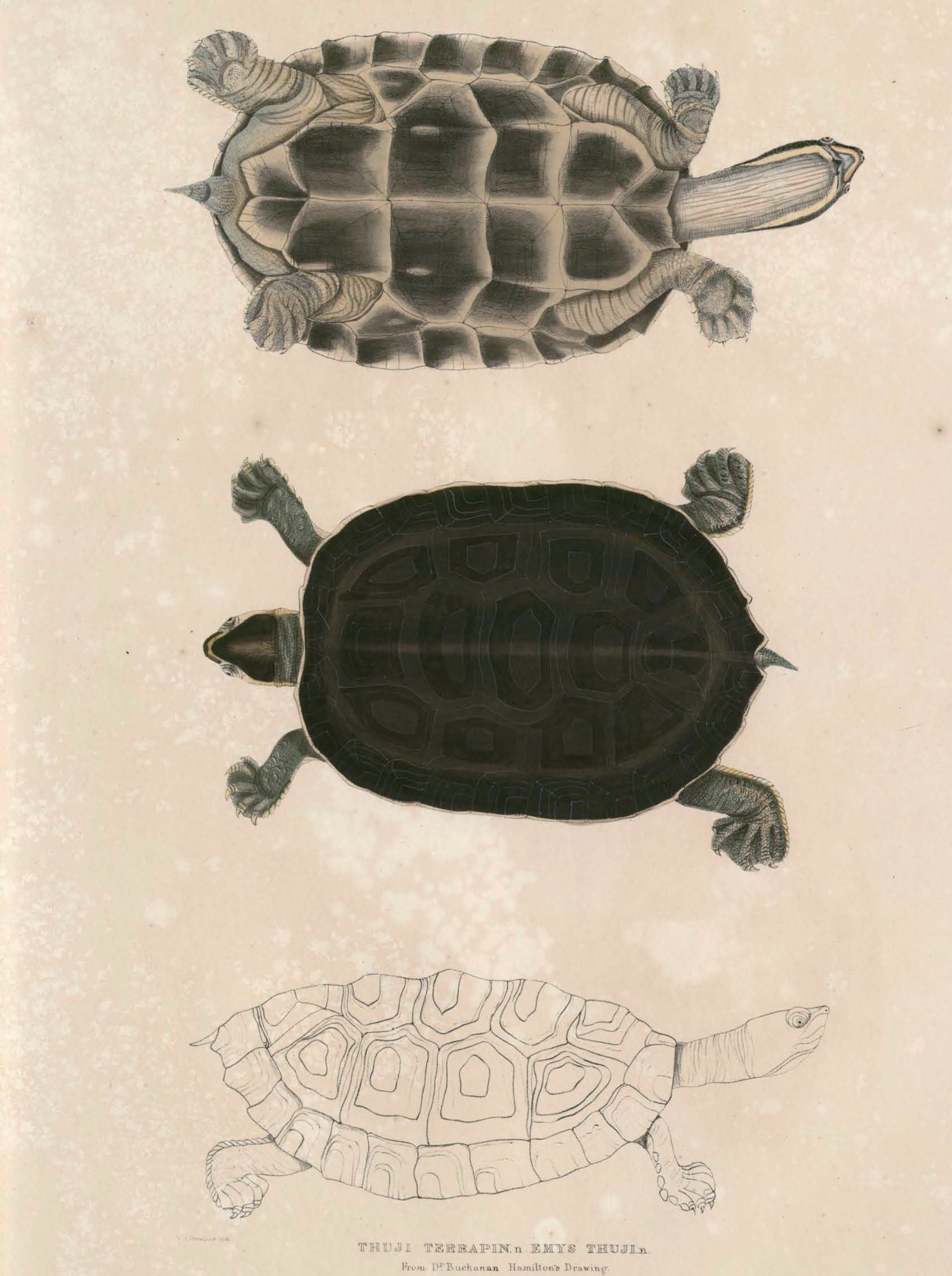
Crowned River Turtle
Hardella thurjii
Photo: Wikimedia Commons (CC) via https://en.wikipedia.org/wiki/Brahminy_river_turtle
Overview
Hardella thurjii (Crowned River Turtle)
Hardella thurjii is a medium-sized freshwater turtle endemic to the Indian subcontinent. Adults typically measure 25-35 cm in carapace length, with females growing larger than males. The species is distinguished by its olive-brown to dark brown shell with distinctive yellow markings on the head, giving rise to its "crowned" common name.
These semi-aquatic turtles are omnivorous, feeding on aquatic vegetation, fruits, fish, and invertebrates. They play important ecological roles as both predators and seed dispersers in riverine ecosystems.
The species inhabits slow-moving rivers, streams, ponds, and wetlands across Bangladesh, India, Nepal, and Pakistan. They prefer areas with muddy substrates and abundant aquatic vegetation, often basking on logs or riverbanks. Their range extends from the Ganges-Brahmaputra river systems to tributaries of the Indus River.
Hardella thurjii faces severe population declines due to multiple threats. Agricultural runoff introduces pesticides and fertilizers into waterways, degrading water quality and reducing prey availability. Industrial pollution further contaminates their aquatic habitats. Conversion of riparian areas for crop cultivation destroys nesting sites and reduces suitable habitat. Logging activities along riverbanks eliminate basking sites and increase erosion, affecting water quality.
Conservation efforts include habitat protection in some protected areas and captive breeding programs in India and Bangladesh. Local community education initiatives aim to reduce direct exploitation and habitat destruction.
The species' outlook remains concerning. Continued habitat degradation and pollution suggest populations will likely continue declining without significant intervention to address water quality and habitat protection across their range.
Hardella thurjii faces threats from pollution entering waterways from farming and forestry activities, as well as from other unidentified sources of contamination. The turtle's habitat is also being damaged by the clearing of forests for logging and the conversion of land for growing crops. All of these threats are currently ongoing, though it's unclear whether they are getting worse or remaining at current levels.
Habitat
Conservation measures underway
Other threatened species in GEOEMYDIDAE


Threatened in Bangladesh



Frequently asked questions
Why is Crowned River Turtle classified as Endangered?
Where does Crowned River Turtle live?
What are the main threats to Crowned River Turtle?
Get weekly conservation intelligence
One short digest a week of the most striking species and country data we ship, plus breaking conservation news paired with our database where it matters.
Free, no spam. One-click unsubscribe in every email.