Ajuga
EN

Ajuga

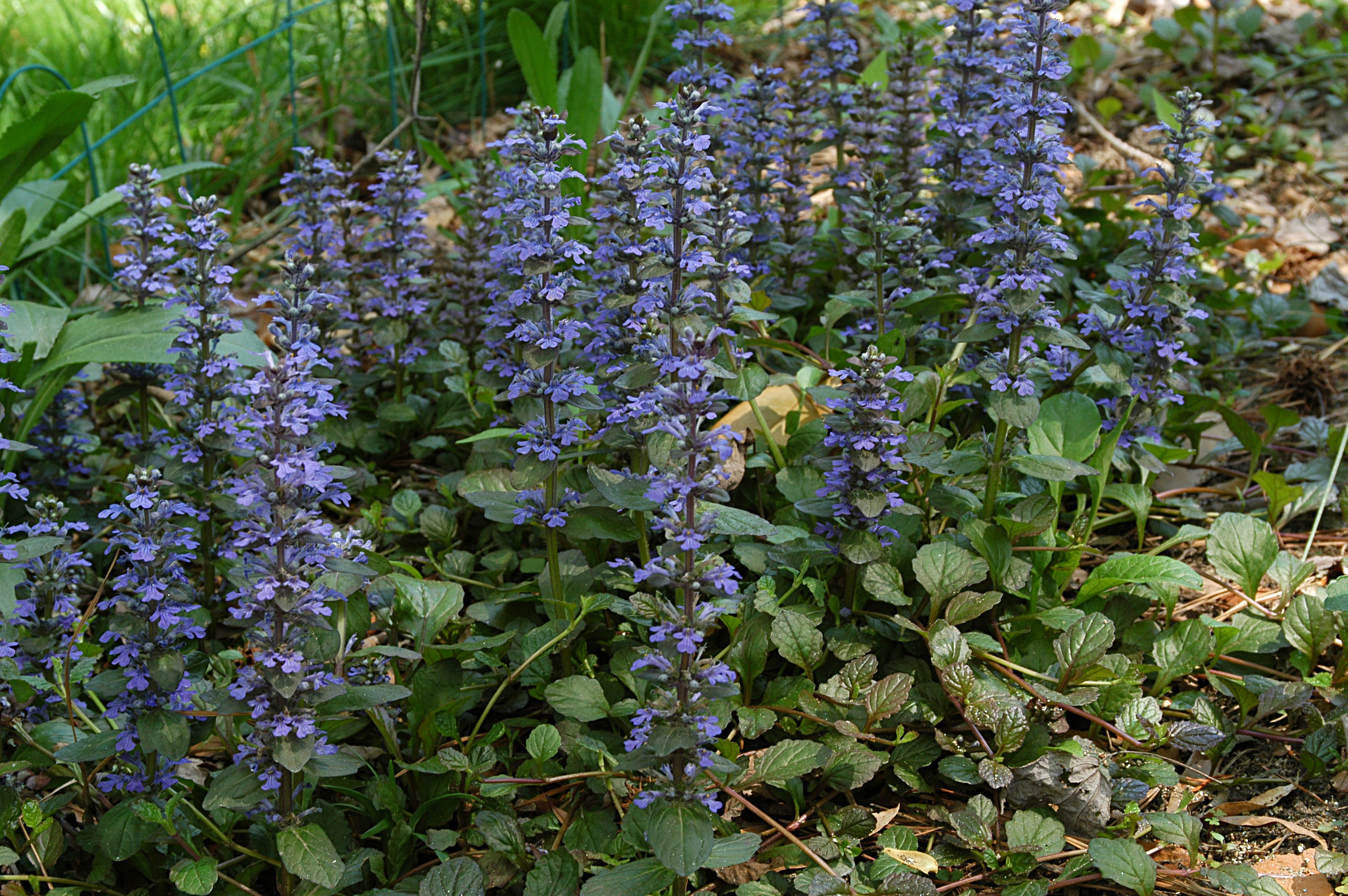
Ajuga reptans

Unknown

Photo: Wikimedia Commons (CC) via https://en.wikipedia.org/wiki/Ajuga_reptans

Overview

Ajuga reptans is a low-growing, mat-forming perennial herb in the mint family, recognized by its creeping stolons, rosettes of dark green to bronze-purple leaves, and short spikes of blue to violet tubular flowers that bloom in spring. It spreads vegetatively through above-ground runners, allowing it to form dense ground cover, and it is pollinated by bees and other insects, which use it as an early-season nectar source. The plant contributes to soil stabilization in woodland and grassland understories and provides habitat structure for small invertebrates.

The species has an extremely wide distribution across Europe, where it is native, and has become naturalized in temperate regions worldwide, including parts of North and South America, Asia, Africa, Australia, and New Zealand. It typically occupies damp meadows, woodland edges, hedgerows, and disturbed grassy areas, favoring moist, partially shaded terrestrial habitats.

No specific threats have been identified for this species. It is widespread, abundant, and often cultivated as an ornamental ground cover, with populations considered stable to increasing in many regions due to its adaptability and ease of spread, including in disturbed and human-modified landscapes.

No targeted conservation measures are in place, as none are currently warranted given the species' broad range and lack of identified pressures.

The outlook for Ajuga reptans is stable. Its extensive geographic distribution, tolerance of varied growing conditions, and common use in horticulture support continued persistence across its range, with no evidence of population decline.

Ajuga reptans faces no significant conservation threats and remains a common, widespread plant. It doesn't require any special protection efforts at this time. The situation is stable, with no signs of new or worsening risks to the species.

Threat summary

Habitat

The natural habitat of Ajuga reptans spans across Europe, extending to the middle taiga subzone of northeastern Russia. The plant thrives in the understory of mixed and parvifoliate forests, benefiting from the higher soil nitrogen and lower acidity these forests provide compared to pure coniferous stands.

TERRESTRIAL· majorTERRESTRIAL· major

Frequently asked questions

Why is Ajuga classified as Endangered?
Ajuga is classified as Endangered — facing a very high risk of extinction in the wild — because population numbers are declining steeply and key habitats are under sustained pressure. Ajuga reptans faces no significant conservation threats and remains a common, widespread plant. It doesn't require any special protection efforts at this time. The situation is stable, with no signs of new or worsening risks to the species.
Where does Ajuga live?
Ajuga occurs in Åland Islands, Albania, Algeria, Andorra, Argentina, and Armenia (plus 79 other countries). Country-level distribution data is sourced from the IUCN Red List and cross-referenced with GBIF occurrences.
What are the main threats to Ajuga?
The main threats to Ajuga are ai-1. The full IUCN-classified threat record for this species is detailed on the species page.

Get weekly conservation intelligence

One short digest a week of the most striking species and country data we ship, plus breaking conservation news paired with our database where it matters.

Free, no spam. One-click unsubscribe in every email.