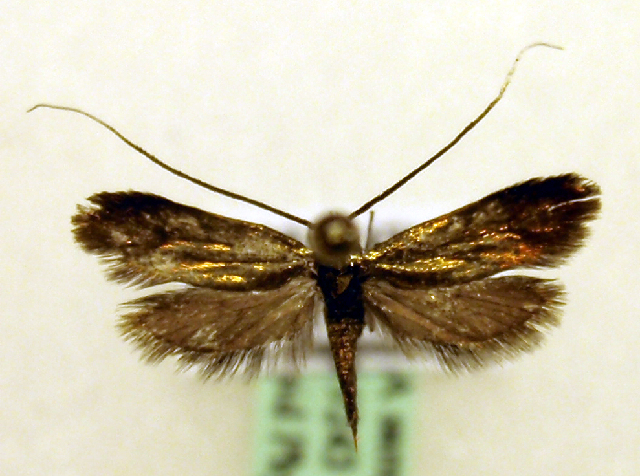
Coppery Long-horn
Nemophora cupriacella
Photo: Wikimedia Commons (CC) via https://en.wikipedia.org/wiki/Nemophora_cupriacella
Overview
Nemophora cupriacella is a moth of the family Adelidae that is found in most of Europe.
The Coppery Long-horn faces significant threats from habitat loss and degradation due to agricultural intensification, urbanization, and changes in woodland management practices. Climate change poses additional risks by altering the distribution and phenology of its host plants, while light pollution disrupts the nocturnal behavior patterns essential for mating and reproduction.
Habitat
This species inhabits deciduous and mixed woodlands, forest edges, and scrubland areas where its larval host plants in the Fagaceae family (particularly oak and beech) are present. Adults are typically found in areas with a mosaic of woodland and open spaces that provide both breeding sites and nectar sources.
Threatened in Austria
Frequently asked questions
Why is Coppery Long-horn classified as Vulnerable?
Where does Coppery Long-horn live?
What are the main threats to Coppery Long-horn?
Get weekly conservation intelligence
One short digest a week of the most striking species and country data we ship, plus breaking conservation news paired with our database where it matters.
Free, no spam. One-click unsubscribe in every email.