
Colombian Giant Redleg Tarantula
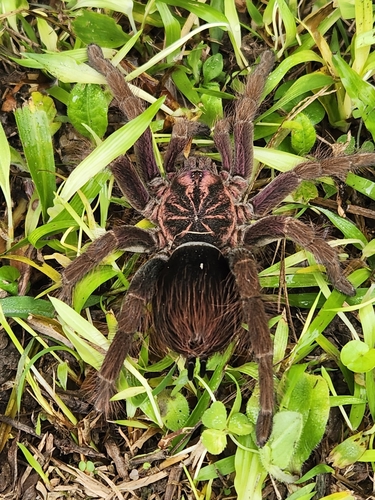
Megaphobema robustum
Photo: Wikimedia Commons (CC) via https://en.wikipedia.org/wiki/Megaphobema_robustum
Overview
Megaphobema robustum, known as the Colombian giant tarantula or Colombian giant redleg, was first described by Anton Ausserer in 1875. Found in the tropical rainforests of Colombia and Brazil near logs, it has a span of 6 to 8 inches and will eat crickets, other large insects, small lizards, and mice.
The Colombian giant tarantula faces significant pressure from habitat destruction due to deforestation and agricultural expansion in Colombia's tropical regions. Collection for the international pet trade and human persecution due to fear and misunderstanding further threaten populations of this large arachnid.
Habitat
Inhabits tropical moist forests and cloud forests in the Colombian Andes, typically found in burrows or under logs and rocks in humid montane environments between 1,000-2,500m elevation. The species prefers areas with dense vegetation cover and high humidity levels characteristic of Colombia's mountainous regions.
Other threatened species in Theraphosidae


Threatened in Colombia
Frequently asked questions
Why is Colombian Giant Redleg Tarantula classified as Vulnerable?
Where does Colombian Giant Redleg Tarantula live?
What are the main threats to Colombian Giant Redleg Tarantula?
Get weekly conservation intelligence
One short digest a week of the most striking species and country data we ship, plus breaking conservation news paired with our database where it matters.
Free, no spam. One-click unsubscribe in every email.