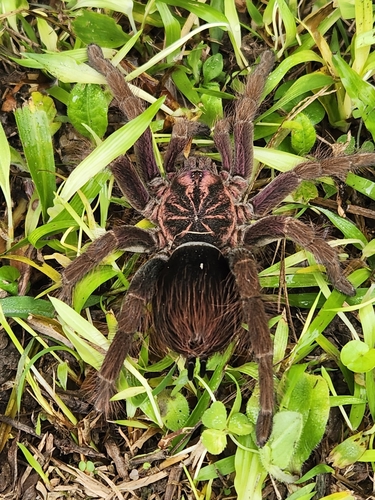
Colombian brown tarantula
Pamphobeteus fortis
Photo: iNaturalist: (c) Nikolas, some rights reserved (CC BY-NC), uploaded by Nikolas
Overview
Pamphobeteus fortis also known as the Colombian giant copperhead or Colombian giant brown tarantula is a tarantula which was first described by Anton Ausserer in 1875. As its common name aptly states it is found in Colombia, Venezuela and Panama.
The Colombian brown tarantula faces severe population declines primarily due to habitat destruction from deforestation, agricultural expansion, and urban development in its limited range. Collection pressure for the international pet trade has further reduced wild populations of this endemic species.
Other threatened species in Theraphosidae


Threatened in Colombia
Frequently asked questions
Why is Colombian brown tarantula classified as Endangered?
Where does Colombian brown tarantula live?
What are the main threats to Colombian brown tarantula?
Get weekly conservation intelligence
One short digest a week of the most striking species and country data we ship, plus breaking conservation news paired with our database where it matters.
Free, no spam. One-click unsubscribe in every email.