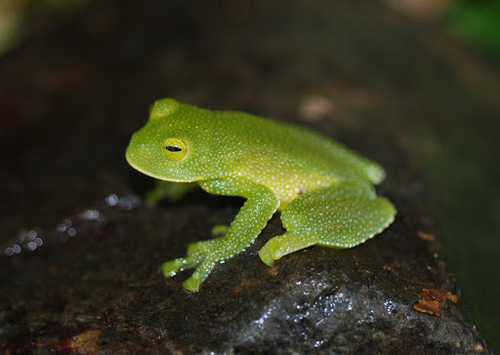
Pacific Giant Glass Frog
Centrolene geckoidea
Photo: Photo: (c) 118045436407732272621, all rights reserved, uploaded by 118045436407732272621
Overview
Centrolene geckoidea is a species of frog in the family Centrolenidae. It is found in Colombia and Ecuador. Its natural habitats are subtropical or tropical moist montane forests and rivers. It is threatened by habitat loss.
Centrolene geckoidea faces severe population decline primarily due to habitat destruction from agricultural expansion and urban development in its limited Andean cloud forest range. The species is particularly vulnerable to chytrid fungal infections, which have devastated glass frog populations throughout Central and South America. Climate change poses an additional threat by altering the delicate moisture and temperature conditions required for this species' survival and reproduction.
Habitat
This glass frog inhabits pristine cloud forests and montane rainforests at elevations between 1,500-2,500 meters in the Andes. It requires areas with high humidity, consistent moisture, and clean streams for breeding, typically found near waterfalls and rocky creek beds within undisturbed forest canopy.
Conservation measures underway
Other threatened species in CENTROLENIDAE
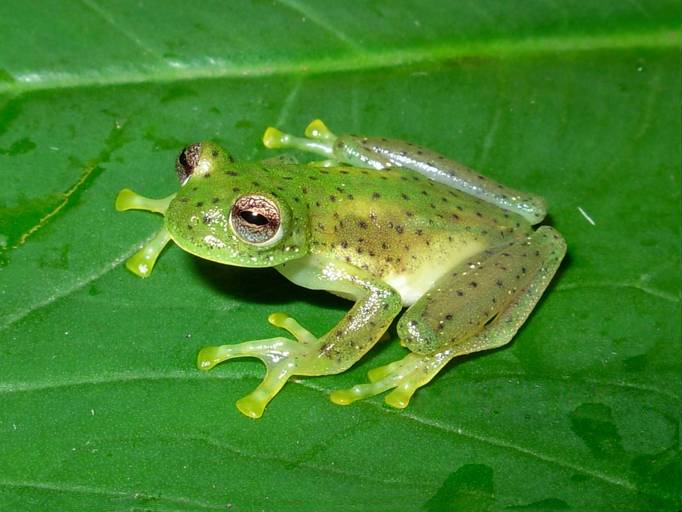
Threatened in Colombia
Frequently asked questions
Why is Pacific Giant Glass Frog classified as Critically Endangered?
Where does Pacific Giant Glass Frog live?
What are the main threats to Pacific Giant Glass Frog?
Get weekly conservation intelligence
One short digest a week of the most striking species and country data we ship, plus breaking conservation news paired with our database where it matters.
Free, no spam. One-click unsubscribe in every email.