
Butler's Dunnart
Sminthopsis butleri
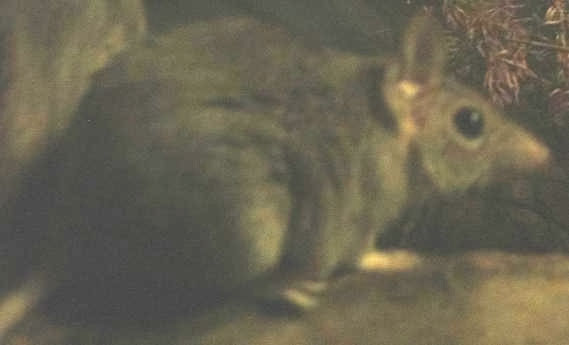
Photo: Wikimedia Commons (CC) via https://en.wikipedia.org/wiki/Carpentarian_dunnart
Overview
Sminthopsis butleri is a small carnivorous marsupial in the family Dasyuridae, characterized by a pointed snout, large eyes, thin ears, and a slender tail typically longer than its body. Weighing only a few grams to a few tens of grams, it is nocturnal and insectivorous, feeding primarily on invertebrates such as beetles, spiders, and crickets. As a small predator, it plays a role in regulating invertebrate populations within its habitat and likely serves as prey for larger predators, including owls and reptiles.
The species is known from northern Australia, including parts of the Northern Territory and offshore islands such as Melville Island, with a fragmented and poorly documented distribution. It is associated with tropical savanna woodland and grassland environments, though it is also recorded in areas with human-modified or artificial terrestrial habitat, suggesting some tolerance of disturbed landscapes.
Butler's Dunnart faces ongoing threats from altered fire regimes, including both frequent, intense wildfires and inappropriate fire suppression practices that change vegetation structure and reduce ground cover needed for shelter and foraging. Invasive species, including predatory feral cats and habitat-altering species, present an additional ongoing pressure, contributing to predation risk and competition.
Conservation attention for this species has been limited relative to many Australian mammals, with efforts focused on improved fire management strategies in northern Australia and broader feral predator control programs implemented across its range. Monitoring remains sparse, and precise population figures are not well established.
The population trend is currently assessed as decreasing. Given continuing fire regime disruption and predation pressure, the species' conservation outlook remains uncertain, with its long-term persistence dependent on more targeted habitat and predator management across its known range.
Butler's Dunnart faces ongoing danger from bushfires and altered fire patterns that destroy the grasslands and woodlands it depends on for shelter and food. It is also threatened by invasive species, such as predators and competitors not native to its habitat, which can hunt it or disrupt its environment. Both of these threats are currently ongoing and show no signs of slowing down.
Habitat
Conservation measures underway
Other threatened species in DASYURIDAE
Threatened in Australia
Frequently asked questions
Why is Butler's Dunnart classified as Vulnerable?
Where does Butler's Dunnart live?
What are the main threats to Butler's Dunnart?
Get weekly conservation intelligence
One short digest a week of the most striking species and country data we ship, plus breaking conservation news paired with our database where it matters.
Free, no spam. One-click unsubscribe in every email.