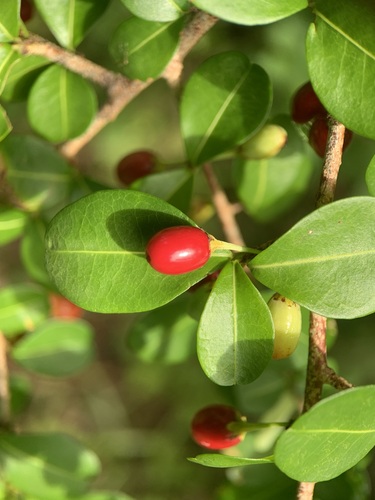
Brisselet
Erythroxylum brevipes
Photo: iNaturalist: (c) Octavio Rivera Hernández, some rights reserved (CC BY-NC), uploaded by Octavio Rivera Hernández
Overview
Brisselet (Erythroxylum brevipes) is a small to medium-sized shrub or tree species belonging to the coca family, characterized by its distinctive short-stalked leaves and small white flowers. This woody plant plays an important ecological role as a food source for various insects and birds, while also contributing to soil stabilization in its native habitat.
Brisselet (Erythroxylum brevipes) is primarily threatened by habitat loss and degradation due to agricultural expansion, urban development, and deforestation in its limited range. The species' restricted distribution makes it particularly vulnerable to localized threats and environmental changes.
Habitat
Brisselet typically inhabits dry coastal scrublands and rocky hillsides with well-drained soils, often growing on limestone substrates. The species is adapted to areas with seasonal rainfall patterns and can tolerate periods of drought.
Other threatened species in Erythroxylaceae
Frequently asked questions
Why is Brisselet classified as Endangered?
Where does Brisselet live?
What are the main threats to Brisselet?
Get weekly conservation intelligence
One short digest a week of the most striking species and country data we ship, plus breaking conservation news paired with our database where it matters.
Free, no spam. One-click unsubscribe in every email.