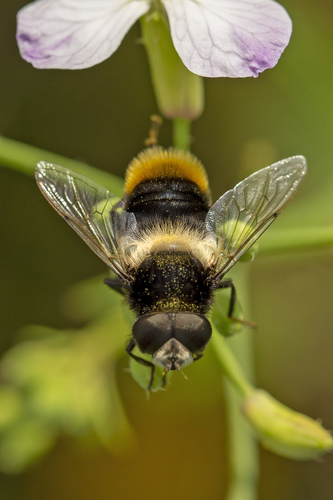
Eristalis oestracea
Photo: iNaturalist: (c) Tina Ellegaard Poulsen, some rights reserved (CC BY), uploaded by Tina Ellegaard Poulsen
Overview
Eristalis oestracea, the orange-tailed drone fly, is a species of hoverfly native to Europe and North America. In Europe it is found in bogs, moors, and coastal dunes. It nectars on white flowers in the carrot family (Apiaceae) and yellow flowers in the aster family (Asteraceae). It is very poorly known in North America. E. oestracea measures 14-15 mm in length.
Bremse-dyndflue (Eristalis oestracea) faces significant threats from habitat degradation and loss of wetland environments essential for its larval development. Agricultural intensification and urban development have reduced the availability of suitable breeding sites, while pollution and climate change further impact the aquatic habitats this hoverfly depends on.
Habitat
This hoverfly species inhabits wetland margins, shallow pools, and slow-moving water bodies where organic matter accumulates, providing suitable conditions for its aquatic larvae. Adults are typically found in adjacent grasslands, meadows, and woodland edges where they feed on nectar from various flowering plants.
Other threatened species in Syrphidae


Threatened in Åland Islands


Frequently asked questions
Why is Eristalis oestracea classified as Vulnerable?
Where does Eristalis oestracea live?
What are the main threats to Eristalis oestracea?
Get weekly conservation intelligence
One short digest a week of the most striking species and country data we ship, plus breaking conservation news paired with our database where it matters.
Free, no spam. One-click unsubscribe in every email.