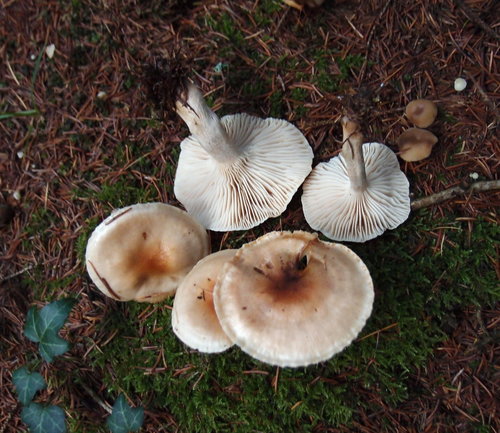
Hygrophorus discoideus
Photo: iNaturalist: (c) Douglas Smith, all rights reserved, uploaded by Douglas Smith
Overview
The Braunscheibiger Schneckling (Hygrophorus discoideus) is a distinctive waxcap mushroom characterized by its brown-disc cap and waxy, widely-spaced gills. This mycorrhizal fungus forms essential symbiotic relationships with coniferous trees, particularly spruce and fir, facilitating nutrient exchange in forest ecosystems. As a decomposer and mycorrhizal partner, it plays a crucial role in maintaining soil health and forest productivity.
Hygrophorus discoideus, the Braunscheibiger Schneckling, faces severe population decline primarily due to habitat loss and degradation of its specialized forest ecosystems. Climate change is altering the moisture and temperature conditions essential for this fungal species' survival and reproduction. Agricultural intensification and urbanization continue to fragment and destroy the old-growth forest habitats where this species occurs.
Habitat
Hygrophorus discoideus inhabits mature coniferous forests, particularly those dominated by Norway spruce and silver fir, where it grows among moss-covered forest floors with consistent moisture levels. The species requires undisturbed, old-growth forest conditions with deep organic soil layers and stable microclimate conditions.
Other threatened species in Hygrophoraceae

Frequently asked questions
Why is Hygrophorus discoideus classified as Critically Endangered?
Where does Hygrophorus discoideus live?
What are the main threats to Hygrophorus discoideus?
Get weekly conservation intelligence
One short digest a week of the most striking species and country data we ship, plus breaking conservation news paired with our database where it matters.
Free, no spam. One-click unsubscribe in every email.