
Zora silvestris
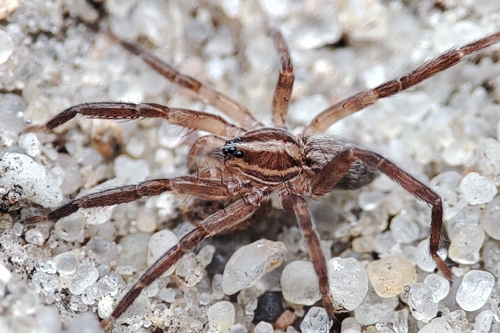
Photo: Wikimedia Commons (CC) via https://en.wikipedia.org/wiki/Zora_silvestris
Overview
Zora silvestris is a prowling spider in the family Miturgidae which is found in Europe and Central Asia.
Primary threats include rapid deforestation and habitat fragmentation due to logging operations and agricultural expansion, which have reduced suitable canopy corridors essential for movement and foraging. Climate change is altering the phenology of its insect prey and the fruiting patterns of trees it depends on for food and nesting sites.
Habitat
In Great Britain, Zora silvestris occurs on dry heathland, most commonly encountered in mature heather. A stronghold of the species is Sherwood Forest where it is found with larger numbers of Zora spinimana in mixed heather and grassland where the encroaching scrub had been cleared. Adults of both sexes are found from May to July, although a female has been recorded in September.
Other threatened species in Miturgidae
Threatened in Austria
Frequently asked questions
Why is Zora silvestris classified as Endangered?
Where does Zora silvestris live?
What are the main threats to Zora silvestris?
Get weekly conservation intelligence
One short digest a week of the most striking species and country data we ship, plus breaking conservation news paired with our database where it matters.
Free, no spam. One-click unsubscribe in every email.