
Blue Jellyskin
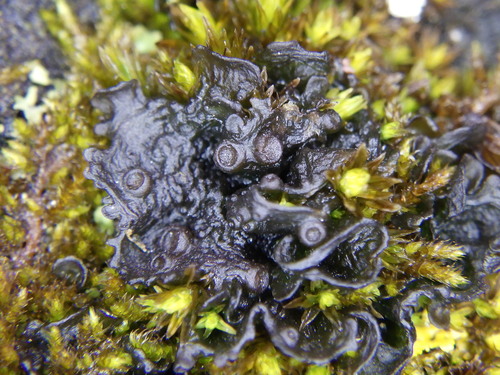
Leptogium cyanescens
Photo: Wikimedia Commons (CC) via https://en.wikipedia.org/wiki/Leptogium_cyanescens
Overview
Leptogium cyanescens, commonly called the blue jellyskin, is a foliose, gelatinous lichen in the family Collemataceae. It is one of the most widespread members of its genus, recorded throughout temperate and subtropical regions on at least four continents.
Blue Jellyskin Lichen faces severe decline primarily due to air pollution, particularly nitrogen deposition and sulfur compounds that alter its sensitive epiphytic habitat. Habitat loss from deforestation and urbanization has eliminated many suitable host trees, while climate change is altering the moisture regimes essential for this species' survival.
Habitat
NatureServe rates the species G5 ("secure") because of its virtually worldwide range and frequency. In North America it is frequent on the bark of deciduous trees from southern Canada through the eastern United States, extending westward into humid forests of British Columbia where populations are considered vulnerable to intensive logging. European records span from the British Isles and...
Other threatened species in Collemataceae
Frequently asked questions
Why is Blue Jellyskin classified as Endangered?
Where does Blue Jellyskin live?
What are the main threats to Blue Jellyskin?
Get weekly conservation intelligence
One short digest a week of the most striking species and country data we ship, plus breaking conservation news paired with our database where it matters.
Free, no spam. One-click unsubscribe in every email.