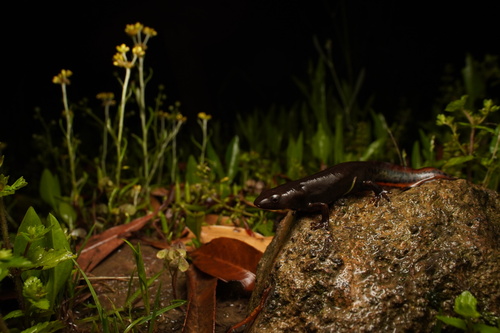
Cynops glaucus
Photo: iNaturalist: 版权所有 (c) MakoPisces (Adrian Ng),保留所有权利, 由 MakoPisces (Adrian Ng) 上传
Overview
The Blue-gray Fire-bellied Newt is a small aquatic salamander characterized by its distinctive blue-gray dorsal coloration and vibrant orange-red ventral surface that serves as a warning display to predators. This semi-aquatic amphibian plays a crucial role in its ecosystem as both predator of aquatic invertebrates and prey for larger vertebrates, helping maintain the delicate balance of freshwater food webs.
The Blue-gray Fire-bellied Newt faces severe population decline primarily due to habitat destruction and degradation in its limited range in China. Agricultural expansion, urbanization, and water pollution have significantly reduced suitable breeding habitats, while collection for the pet trade has further pressured remaining populations.
Habitat
Blue-gray Fire-bellied Newts inhabit shallow, slow-moving streams and seasonal ponds surrounded by dense riparian vegetation in temperate montane regions. They require clean, well-oxygenated water with abundant aquatic plants and nearby terrestrial refugia under logs and leaf litter for overwintering.
Other threatened species in Salamandridae
Frequently asked questions
Why is Cynops glaucus classified as Critically Endangered?
Where does Cynops glaucus live?
What are the main threats to Cynops glaucus?
Get weekly conservation intelligence
One short digest a week of the most striking species and country data we ship, plus breaking conservation news paired with our database where it matters.
Free, no spam. One-click unsubscribe in every email.