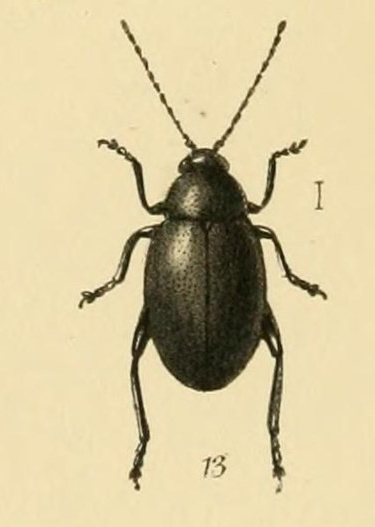
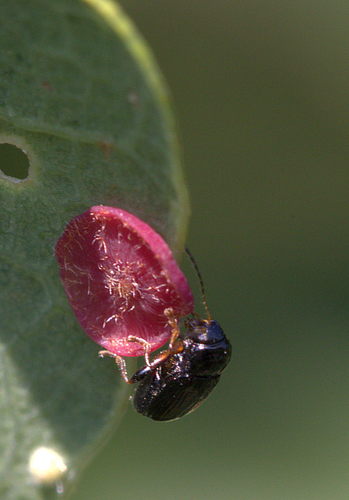
Longitarsus nigerrimus
Photo: Wikimedia Commons (CC) via https://en.wikipedia.org/wiki/Bladderwort_flea_beetle
Overview
Longitarsus nigerrimus is a greenish-black coloured species of beetle in the tribe Alticini that can be found in European countries such Austria, Czech Republic, France, Germany, Great Britain, Hungary, Italy, Poland, Slovenia, Switzerland, Benelux, Yugoslavian states, Baltic states, Scandinavia, and in Eastern Europe. It can also be found in North Russia, specifically in Siberia and east to Amur.
Longitarsus nigerrimus is critically endangered primarily due to habitat loss and degradation of its specialized wetland environments. The species depends on specific host plants in marshy areas that are increasingly threatened by drainage, agricultural conversion, and urban development.
Habitat
The species emerge in midsummer to mate and lay eggs. After they lay their eggs they die, living their young to feed on such plants as Utricularia minor and other Utricularia species. They feed on them till adulthood, and then go to overwinter. They grow up to long, with females being the largest.
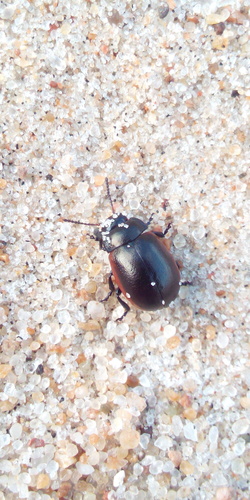
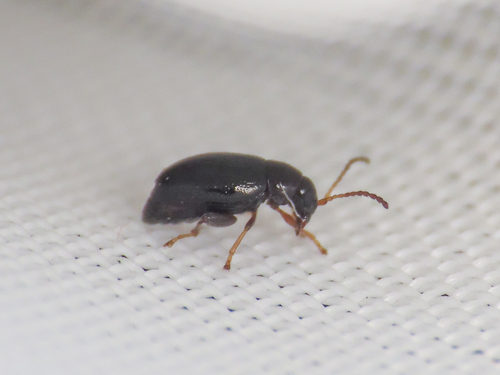
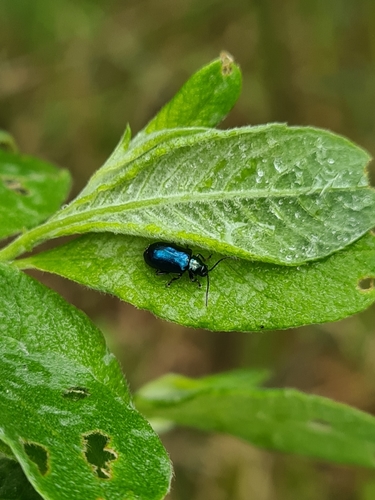
Other threatened species in Chrysomelidae
Frequently asked questions
Why is Longitarsus nigerrimus classified as Critically Endangered?
Where does Longitarsus nigerrimus live?
What are the main threats to Longitarsus nigerrimus?
Get weekly conservation intelligence
One short digest a week of the most striking species and country data we ship, plus breaking conservation news paired with our database where it matters.
Free, no spam. One-click unsubscribe in every email.