BLST
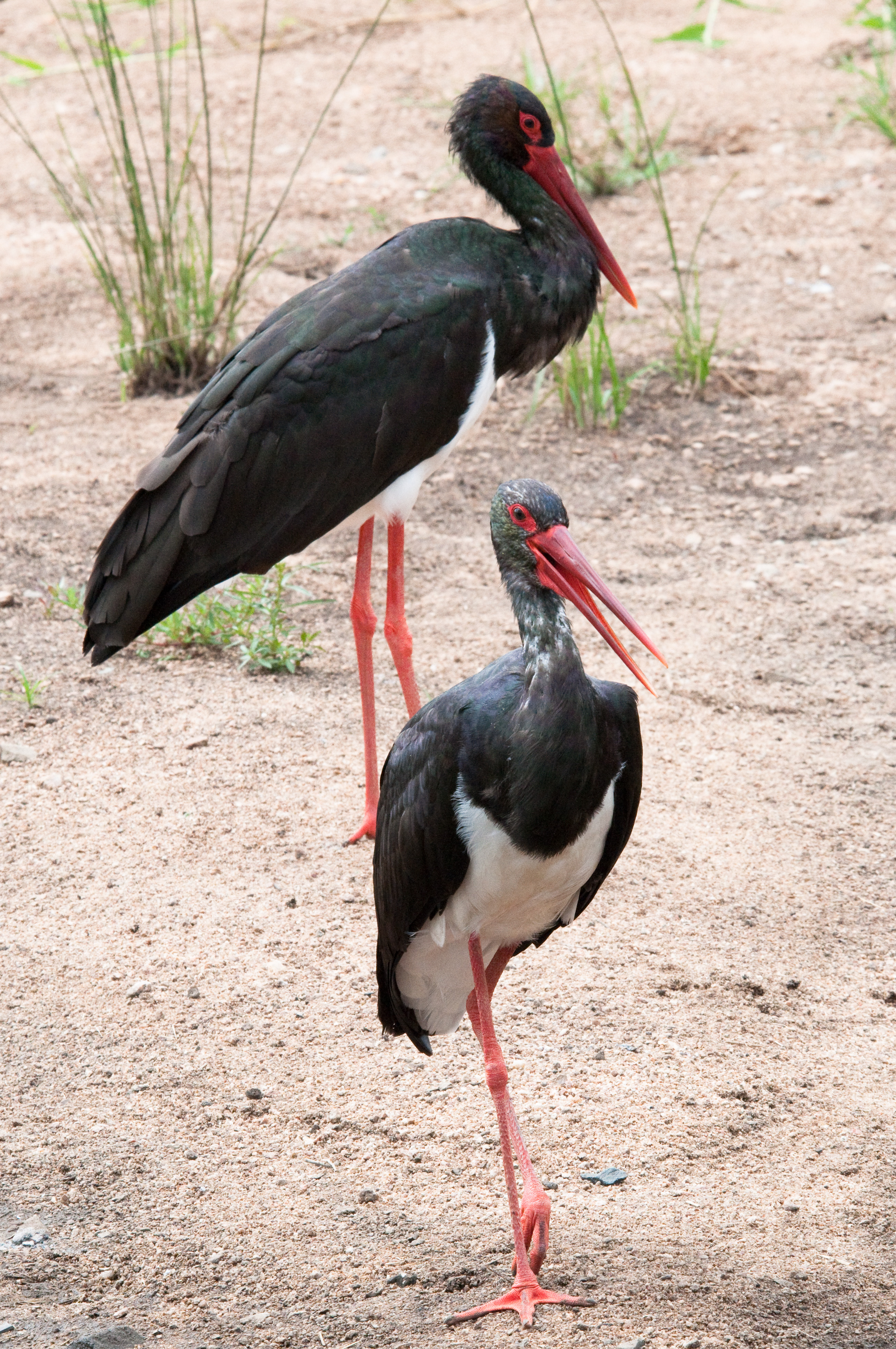
Ciconia nigra
Photo: Wikimedia Commons (CC) via https://en.wikipedia.org/wiki/Black_stork
Overview
The black stork is a large bird in the stork family Ciconiidae. It was first described by Carl Linnaeus in the 10th edition of his Systema Naturae. Measuring on average 95 to 100 cm from beak tip to end of tail with a 145-to-155 cm (57-to-61 in) wingspan, the adult black stork has mainly black plumage, with white underparts, long red legs and a long pointed red beak.
A widespread but uncommon species, it breeds in scattered locations across Europe, and east across the Palearctic to the Pacific Ocean. It is a long-distance migrant, with European populations wintering in tropical Sub-Saharan Africa, and Asian populations in the Indian subcontinent. When migrating between Europe and Africa, it avoids crossing broad expanses of the Mediterranean Sea and detours via the Levant in the east, the...
The Black Stork faces significant pressure from habitat loss and degradation, particularly the destruction of old-growth forests needed for nesting and wetland drainage that eliminates crucial foraging areas. Human disturbance at breeding sites, pollution of aquatic ecosystems, and climate change impacts on water availability further threaten populations across their range.
Habitat
Mature deciduous and mixed forests near freshwater bodies including rivers, streams, marshes, and fish ponds, typically requiring large old trees for nesting and shallow waters rich in fish, amphibians, and aquatic invertebrates for foraging.
Other threatened species in Ciconiidae


Frequently asked questions
Why is BLST classified as Vulnerable?
Where does BLST live?
What are the main threats to BLST?
Get weekly conservation intelligence
One short digest a week of the most striking species and country data we ship, plus breaking conservation news paired with our database where it matters.
Free, no spam. One-click unsubscribe in every email.