
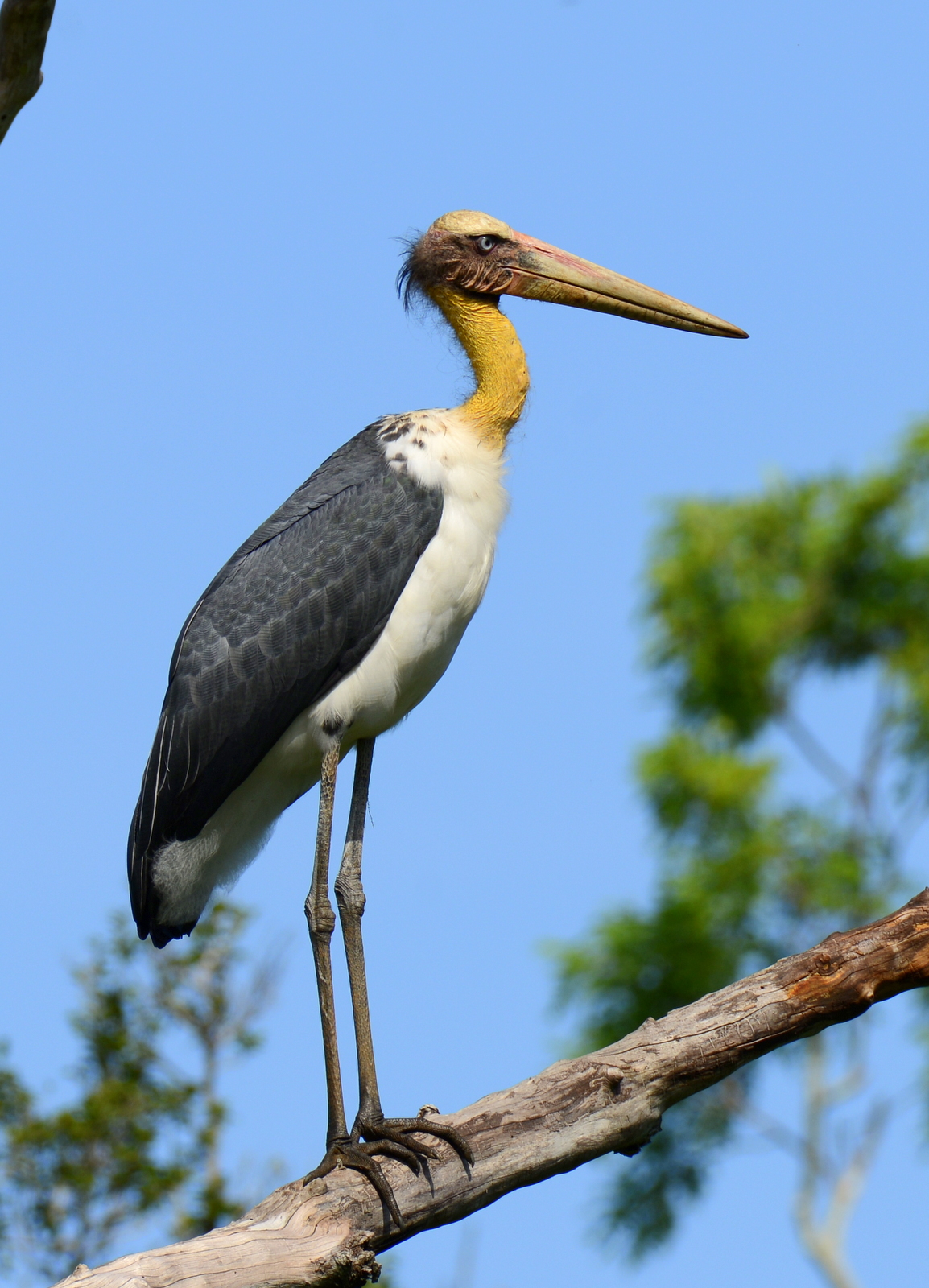
Greater Adjutant
Leptoptilos dubius
Photo: Wikimedia Commons (CC) via https://en.wikipedia.org/wiki/Greater_adjutant
Overview
The greater adjutant is a member of the stork family, Ciconiidae. Its genus includes the lesser adjutant of Asia and the marabou stork of Africa. Once found widely across southern Asia and mainland southeast Asia, the greater adjutant is now restricted to a much smaller range with only three breeding populations; two in India, one in the north-eastern state of Assam and a smaller one around Bhagalpur; and another breeding population in Cambodia.
They disperse widely after the breeding season. This large stork has a massive wedge-shaped bill, a bare head and a distinctive neck pouch. During the day, it soars in thermals along with vultures with whom it shares the habit of scavenging.
They feed mainly on carrion and offal; however, they are opportunistic and will sometimes prey on...
The Greater Adjutant has experienced severe population declines primarily due to widespread habitat loss from wetland drainage, deforestation, and urban development across its range in South and Southeast Asia. Additional pressures include human disturbance at nesting and feeding sites, pollution of aquatic ecosystems, and direct persecution due to cultural taboos and conflicts with human activities.
Habitat
Greater adjutant in water (Kaziranga, Assam)This species was once a widespread winter visitor in the riverine plains of northern India. However, their breeding areas were largely unknown for a long time until a very large nesting colony was finally discovered in 1877 at Shwaygheen on the Sittaung River, Pegu, Burma. It was believed that the Indian birds bred there. This breeding colony, which...
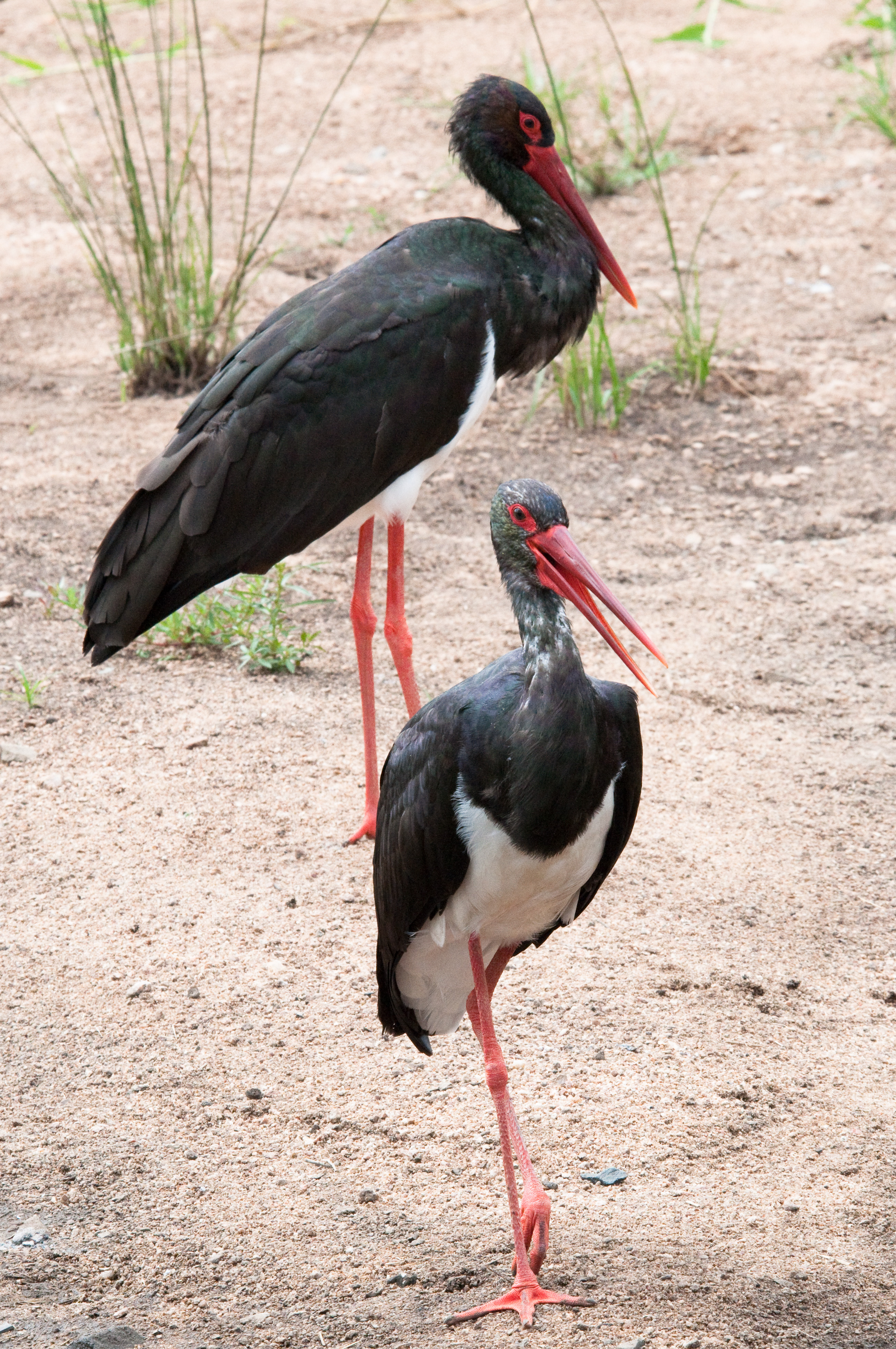
Other threatened species in Ciconiidae

Frequently asked questions
Why is Greater Adjutant classified as Endangered?
Where does Greater Adjutant live?
What are the main threats to Greater Adjutant?
Get weekly conservation intelligence
One short digest a week of the most striking species and country data we ship, plus breaking conservation news paired with our database where it matters.
Free, no spam. One-click unsubscribe in every email.