Normanbya normanbyi
Overview
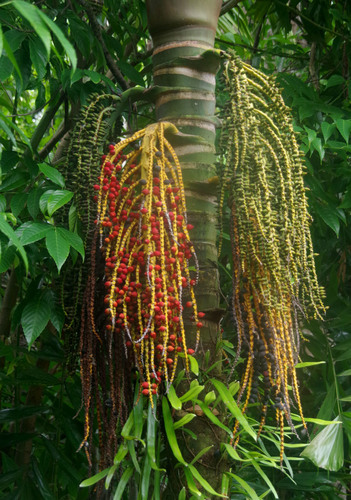
Normanbya normanbyi, commonly known as the black palm, is a solitary-trunked palm tree endemic to northeastern Australia. It grows to heights of around 20-25 metres, with a slender grey trunk and a crown of feathery, arching pinnate fronds. The species produces clusters of small flowers followed by ovoid fruits that provide food for various forest birds and mammals, including cassowaries, which likely play a role in seed dispersal.
The hard, dark timber of the trunk has given rise to its common name and has historically made it valued for construction and craft purposes.
The species is restricted to the Wet Tropics region of northeastern Queensland, where it occupies lowland and near-coastal subtropical and tropical moist forest. Its range includes areas bordering marine coastal and supratidal zones, reflecting its preference for humid, high-rainfall environments at low elevation.
Threats to Normanbya normanbyi include habitat loss from residential and commercial development and the expansion of agricultural and aquaculture land, which fragment and reduce available forest habitat. Historical and ongoing logging has removed mature individuals valued for their timber. The species is also vulnerable to severe storms and flooding events, which can damage or destroy stands, as well as temperature extremes that may stress populations already confined to a narrow climatic range.
Conservation efforts include the species' occurrence within protected areas of the Wet Tropics World Heritage Area, which affords some habitat protection from clearing. Population monitoring and habitat management within these reserves continue.
The population trend is currently unknown, making trajectory difficult to assess. Continued habitat protection within its restricted range remains important given ongoing development pressures and climate-related risks.
This palm faces ongoing pressure from land being cleared for housing, businesses, and farming, as well as trees being cut down for timber. It's also vulnerable to severe weather events like storms and flooding, and to extreme temperatures that can stress or damage the plants. These threats currently appear stable, continuing at a steady ongoing pace rather than clearly worsening or improving.
Habitat
This palm species is endemic to the wet tropical rainforests of northeastern Queensland, Australia, typically occurring in lowland and upland rainforest areas with high humidity and consistent moisture. It grows in the understory and margins of dense rainforest, particularly in areas with rich, well-drained soils.
Other threatened species in ARECACEAE
Threatened in Australia
Frequently asked questions
Why is Normanbya normanbyi classified as Vulnerable?
Where does Normanbya normanbyi live?
What are the main threats to Normanbya normanbyi?
Get weekly conservation intelligence
One short digest a week of the most striking species and country data we ship, plus breaking conservation news paired with our database where it matters.
Free, no spam. One-click unsubscribe in every email.