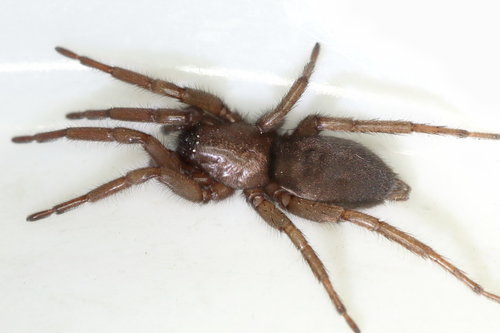
bijlsprietje
Pelecocera tricincta
Pelecocera tricincta, commonly known as the bijlsprietje, is a distinctive hoverfly species characterized by its metallic green-bronze coloration and three prominent yellow bands across its abdomen. This specialized pollinator plays a crucial ecological role in maintaining plant diversity within its native ecosystems, particularly favoring umbelliferous flowers during its adult feeding stage.
21
Countries
Photo: Wikimedia Commons (CC) via https://en.wikipedia.org/wiki/Pelecocera_tricincta
Taxonomy & Classification
Kingdom
Animalia
Phylum
Arthropoda
Class
Insecta
Order
Diptera
Family
Syrphidae
Genus
Pelecocera
bijlsprietje belongs to the family Syrphidae, order Diptera, within the Insecta class.
Species Profile
Pelecocera tricincta, commonly known as the bijlsprietje, is a distinctive hoverfly species characterized by its metallic green-bronze coloration and three prominent yellow bands across its abdomen. This specialized pollinator plays a crucial ecological role in maintaining plant diversity within its native ecosystems, particularly favoring umbelliferous flowers during its adult feeding stage.
Pelecocera tricincta, a specialized hoverfly species, faces severe population declines primarily due to habitat loss and degradation of its specific breeding and foraging environments. The species' narrow ecological requirements make it particularly vulnerable to changes in land use, agricultural intensification, and loss of the dead wood substrates essential for larval development.
Key Facts
Habitat & Distribution
Pelecocera tricincta inhabits flower-rich meadows, woodland clearings, and traditional agricultural landscapes with abundant hedgerows and field margins. The species requires areas with both nectar sources from native wildflowers and suitable breeding substrates in decaying organic matter or loose soil.
Threats
IUCN Red List: Endangered
Pelecocera tricincta, a specialized hoverfly species, faces severe population declines primarily due to habitat loss and degradation of its specific breeding and foraging environments. The species' narrow ecological requirements make it particularly vulnerable to changes in land use, agricultural intensification, and loss of the dead wood substrates essential for larval development.
Habitat loss and fragmentation
Loss of dead wood substrates for breeding
Agricultural intensification
Climate change affecting host tree species
Forest management practices removing decaying timber
Found in 21 Countries
National vs Global Threat Status
How this species is assessed at the national level compared to its IUCN global status (EN).
| Country | National Status | Global Status | Comparison |
|---|---|---|---|
| EU | LCLeast Concern | ENEndangered | Lower local risk |
| EU | LCLeast Concern | ENEndangered | Lower local risk |
National Red List data sourced from the National Red List Project (nationalredlist.org, ZSL) and country-specific Red List authorities.
Community Sightings
Report a sightingNo community sightings yet. Be the first to report!
Sources & Attribution
How to Cite
IUCN: IUCN (2025). The IUCN Red List of Threatened Species. Version 2025-1. Available at: https://www.iucnredlist.org. doi:10.2305/IUCN.UK.2025-1.RLTS
GBIF: GBIF.org (2025). GBIF Home Page. Available at: https://www.gbif.org
National Red Lists: ZSL (2025). National Red List. Zoological Society of London. Available at: https://www.nationalredlist.org
This page: SpeciesRadar (2025). bijlsprietje (Pelecocera tricincta). SpeciesRadar: Intelligence for Earth's Biodiversity. Available at: https://speciesradar.org/species/bijlsprietje