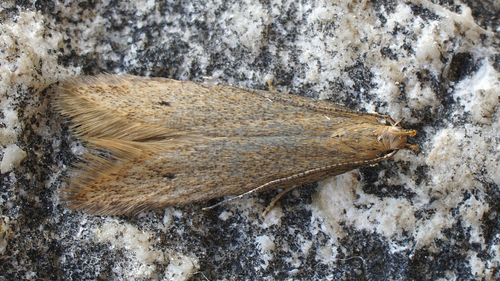
Xystophora carchariella
Photo: iNaturalist: (c) cossus, some rights reserved (CC BY-NC)
Overview
Xystophora carchariella is a moth of the family Gelechiidae. It is found from southern and central Europe to the Ural Mountains, Sweden and the Baltic States. Outside of Europe, it is also found in Turkey, China and the Russian Far East.
Primary threats to backvickermal populations include ocean acidification, which weakens their calcium carbonate shells, and coastal development that destroys critical spawning and nursery habitats. Climate change-induced coral bleaching events have also significantly reduced available feeding grounds, while pollution from agricultural runoff creates hypoxic conditions that severely impact their reproductive success.
Habitat
Backvickermails inhabit shallow coral reef systems and rocky intertidal zones at depths ranging from 2-25 meters, particularly favoring areas with moderate water flow and abundant coralline algae. They show strong preference for crevices and overhangs in limestone formations where they can shelter during daylight hours while maintaining access to their primary algal food sources.
Other threatened species in Gelechiidae


Threatened in Austria
Frequently asked questions
Why is Xystophora carchariella classified as Endangered?
Where does Xystophora carchariella live?
What are the main threats to Xystophora carchariella?
Get weekly conservation intelligence
One short digest a week of the most striking species and country data we ship, plus breaking conservation news paired with our database where it matters.
Free, no spam. One-click unsubscribe in every email.