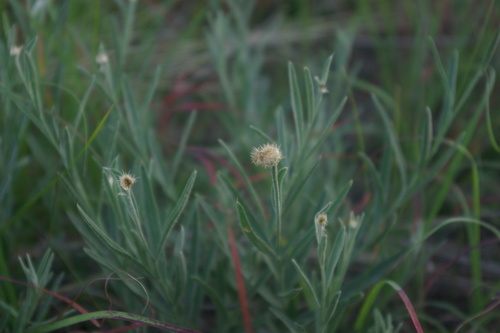
Awarian Centaury
Psephellus avaricus
Photo: Photo: (c) ramazan_murtazaliev, some rights reserved (CC BY-NC), uploaded by ramazan_murtazaliev
Overview
Awarian Centaury (Psephellus avaricus)
The Awarian Centaury is a flowering plant belonging to the Asteraceae family, characterized by its distinctive purple-pink flower heads typical of centaury species. This herbaceous perennial produces solitary capitula with spiny bracts and grows as a low, compact plant adapted to harsh mountainous conditions. Like other members of its genus, it likely serves as a nectar source for local pollinators and contributes to the specialized plant communities of high-altitude ecosystems.
This critically endangered species is endemic to the Caucasus region, with its range apparently restricted to specific mountainous areas. The species inhabits terrestrial environments, typically found in alpine or subalpine zones where it has adapted to rocky soils and extreme weather conditions characteristic of high-elevation habitats.
The specific threats facing the Awarian Centaury remain poorly documented, though its critical conservation status suggests severe population decline or extremely limited distribution. High-altitude endemic plants commonly face pressures from climate change, which can shift suitable habitat zones upward beyond available terrain, and from human activities such as grazing or infrastructure development in mountain regions.
Current conservation measures for this species are not well-documented in available literature, reflecting the broader challenge of protecting poorly-studied endemic plants in remote locations. The species' population trend is listed as unknown, indicating insufficient monitoring data to assess whether numbers are stable, declining, or recovering.
The outlook for Psephellus avaricus remains uncertain due to limited ecological knowledge and unclear conservation status, highlighting the urgent need for targeted research and habitat assessment.
Based on the available information, the specific threats facing Awarian Centaury have not yet been formally assessed or documented by conservation scientists. Without this threat assessment, it's not possible to identify what particular dangers this plant species may be facing in its natural habitat. The status of whether threats are increasing, stable, or decreasing cannot be determined until a proper threat evaluation is completed.
Habitat
Conservation measures underway
Other threatened species in ASTERACEAE
Threatened in Russia
Frequently asked questions
Why is Awarian Centaury classified as Critically Endangered?
Where does Awarian Centaury live?
What are the main threats to Awarian Centaury?
Get weekly conservation intelligence
One short digest a week of the most striking species and country data we ship, plus breaking conservation news paired with our database where it matters.
Free, no spam. One-click unsubscribe in every email.