
Australian Snubfin Dolphin
Orcaella heinsohni
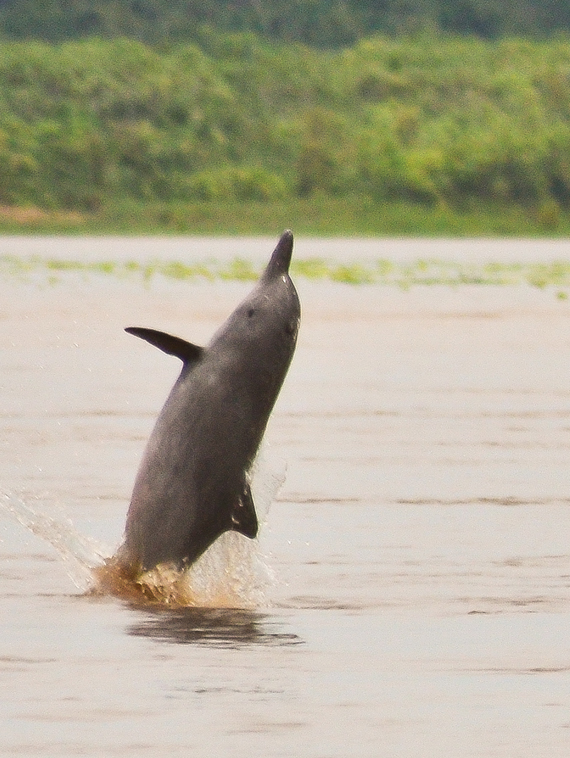
Photo: Wikimedia Commons (CC) via https://en.wikipedia.org/wiki/Australian_snubfin_dolphin
Overview
The Australian snubfin dolphin is a small, coastal cetacean distinguished by a rounded, bulbous head lacking a pronounced beak, a small triangular or slightly hooked dorsal fin, and a mottled grey-to-brown body that pales toward the belly. Adults typically reach around 2.3 metres in length. They are highly social, forming small groups, and use varied vocalizations for communication and echolocation while foraging on fish, cephalopods, and crustaceans.
As a mid-level predator, the species helps regulate prey populations in the estuarine and nearshore food webs it inhabits.
Its range is restricted to tropical and subtropical waters of northern Australia, with additional records from Papua New Guinea and the Solomon Islands. It favors shallow, turbid habitats close to shore, including marine neritic and intertidal zones, coastal and supratidal areas, and the lower reaches of permanent rivers and estuaries, rarely venturing far from coastlines.
The species faces cumulative pressure from coastal development tied to urban and industrial expansion, port and shipping activity, and habitat modification from agriculture, aquaculture, and mining runoff. Entanglement in fishing gear and bycatch in net fisheries are significant mortality sources, compounded by pollution from agricultural and industrial effluents, underwater noise, and habitat degradation linked to droughts, storms, and flooding events affecting freshwater inflows.
Conservation responses include population monitoring programs, habitat protection within some marine parks, restrictions on gillnet use in certain areas, and research into population structure and movement patterns to inform management. Cross-border cooperation remains limited given the species' presence in Papua New Guinea and the Solomon Islands.
With a small, fragmented population and ongoing habitat and fishery-related pressures, the population trend remains decreasing, and the long-term outlook depends on effective mitigation of coastal development and bycatch across its range.
Australian Snubfin Dolphins face a wide range of ongoing pressures, especially from coastal development, farming, and industrial activity that pollute and degrade the rivers and coastal waters they depend on. They are also at risk from being accidentally caught in fishing nets, disturbed by boat traffic and noise, and affected by habitat changes linked to droughts, floods, and storms. Overall, these threats appear to be continuing steadily across their range rather than easing.
Habitat
Conservation measures underway
Other threatened species in DELPHINIDAE


Threatened in Australia
Frequently asked questions
Why is Australian Snubfin Dolphin classified as Vulnerable?
Where does Australian Snubfin Dolphin live?
What are the main threats to Australian Snubfin Dolphin?
Get weekly conservation intelligence
One short digest a week of the most striking species and country data we ship, plus breaking conservation news paired with our database where it matters.
Free, no spam. One-click unsubscribe in every email.