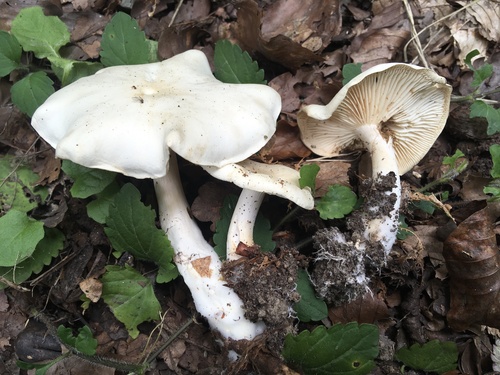
Aromatic Knight
Tricholoma lascivum
Photo: iNaturalist: no rights reserved, uploaded by Sigrid Jakob
Overview
The Aromatic Knight (Tricholoma lascivum) is a distinctive mushroom species belonging to the Tricholomataceae family, characterized by its robust fruiting body and notably strong, sweet aromatic scent that gives the species its common name. The cap typically measures 5-12 centimeters across, displaying a pale cream to light brown coloration with darker brown scales concentrated toward the center. The thick, white stem often shows a slight bulbous base, while the closely spaced gills remain white to cream-colored throughout maturation.
This mycorrhizal fungus forms essential symbiotic relationships with specific deciduous tree species, particularly ancient oak and beech trees in old-growth European forests. The Aromatic Knight has an extremely limited geographic range, documented only in scattered locations across central and eastern Europe, with the most significant populations historically recorded in the Carpathian Mountains and isolated pockets of primeval forest in Romania and Slovakia. The species demonstrates remarkable specificity in its habitat requirements, appearing exclusively in undisturbed forest ecosystems with complex soil chemistry and established fungal networks that may take centuries to develop.
Currently classified as Critically Endangered by the IUCN, Tricholoma lascivum faces severe population declines due to the ongoing destruction of its specialized habitat. Despite its precarious status, recent mycological surveys have identified several previously unknown populations in protected forest reserves, offering hope for targeted conservation efforts. The species serves as an important indicator of forest ecosystem health, and its presence signals the existence of intact, biodiverse woodland communities that support numerous other rare and endemic species.
The primary threat to Tricholoma lascivum stems from the widespread logging and fragmentation of old-growth deciduous forests across its European range, which destroys the complex mycorrhizal networks essential for the species' survival. Commercial forestry practices that replace ancient woodland with monoculture plantations eliminate the specific soil conditions and host tree relationships required by the Aromatic Knight. Climate change poses an additional threat by altering precipitation patterns and soil moisture levels in the species' remaining habitat fragments, potentially disrupting the delicate ecological balance necessary for fruiting body production.
Habitat
Tricholoma lascivum inhabits undisturbed old-growth deciduous forests, particularly those dominated by ancient oak and beech trees with rich, well-drained soils and complex understory vegetation. The species requires stable forest ecosystems with established mycorrhizal networks and appears most frequently in areas with minimal human disturbance and consistent moisture levels throughout the growing season.
Other threatened species in Tricholomataceae


Threatened in Åland Islands



Frequently asked questions
Why is Aromatic Knight classified as Critically Endangered?
Where does Aromatic Knight live?
What are the main threats to Aromatic Knight?
Get weekly conservation intelligence
One short digest a week of the most striking species and country data we ship, plus breaking conservation news paired with our database where it matters.
Free, no spam. One-click unsubscribe in every email.