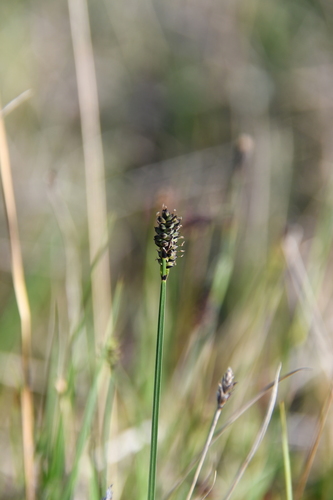
Arctic marsh sedge
Carex holostoma
Photo: iNaturalist: (c) Игорь Поспелов, some rights reserved (CC BY-NC), uploaded by Игорь Поспелов
Overview
Arctic marsh sedge (Carex holostoma) is a perennial grass-like plant characterized by its dense tufted growth form and distinctive triangular stems typical of sedges. This cold-adapted species produces small, inconspicuous flowers arranged in compact spikes and plays a crucial role in Arctic wetland ecosystems by stabilizing soil and providing habitat structure for small invertebrates and nesting birds.
Arctic marsh sedge faces significant threats from climate change-induced habitat loss as warming temperatures alter Arctic wetland ecosystems and permafrost dynamics. The species' restricted distribution in specialized Arctic marsh habitats makes it particularly vulnerable to environmental changes and human disturbances in the Arctic region.
Habitat
Arctic marsh sedge inhabits wet Arctic and subarctic marshes, sedge meadows, and boggy areas with standing or slow-moving water. The species typically occurs in low-lying wetland areas with organic soils and is associated with permafrost-influenced hydrology in northern latitudes.
Other threatened species in Cyperaceae


Frequently asked questions
Why is Arctic marsh sedge classified as Vulnerable?
Where does Arctic marsh sedge live?
What are the main threats to Arctic marsh sedge?
Get weekly conservation intelligence
One short digest a week of the most striking species and country data we ship, plus breaking conservation news paired with our database where it matters.
Free, no spam. One-click unsubscribe in every email.