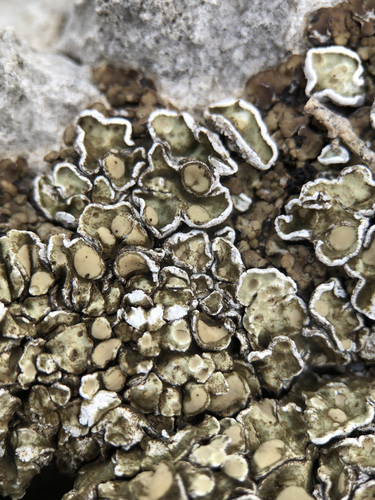
Squamarina gypsacea
Photo: iNaturalist: (c) Heikel B., some rights reserved (CC BY-NC), uploaded by Heikel B.
Overview
Squamarina gypsacea is a distinctive crustose lichen that forms thin, grayish-white to pale yellow crusts on rock surfaces. This slow-growing species plays an important ecological role as a pioneer colonizer of bare substrates and contributes to soil formation through gradual rock weathering processes.
Squamarina gypsacea faces significant threats from habitat destruction and degradation of its specialized gypsum-rich environments. Mining activities, urban development, and infrastructure projects pose particular risks to the limited gypsum outcrops and semi-arid landscapes where this lichen occurs. Climate change and altered precipitation patterns may further stress populations already restricted to specific geological substrates.
Habitat
This lichen species occurs on gypsum-rich soils, rocks, and outcrops in semi-arid and Mediterranean climates. It typically inhabits open, sun-exposed areas with calcareous or gypsiferous substrates, often in steppe-like environments and dry grasslands.
Other threatened species in Stereocaulaceae
Frequently asked questions
Why is Squamarina gypsacea classified as Vulnerable?
Where does Squamarina gypsacea live?
What are the main threats to Squamarina gypsacea?
Get weekly conservation intelligence
One short digest a week of the most striking species and country data we ship, plus breaking conservation news paired with our database where it matters.
Free, no spam. One-click unsubscribe in every email.