
Almiri Killifish
Aphanius almiriensis
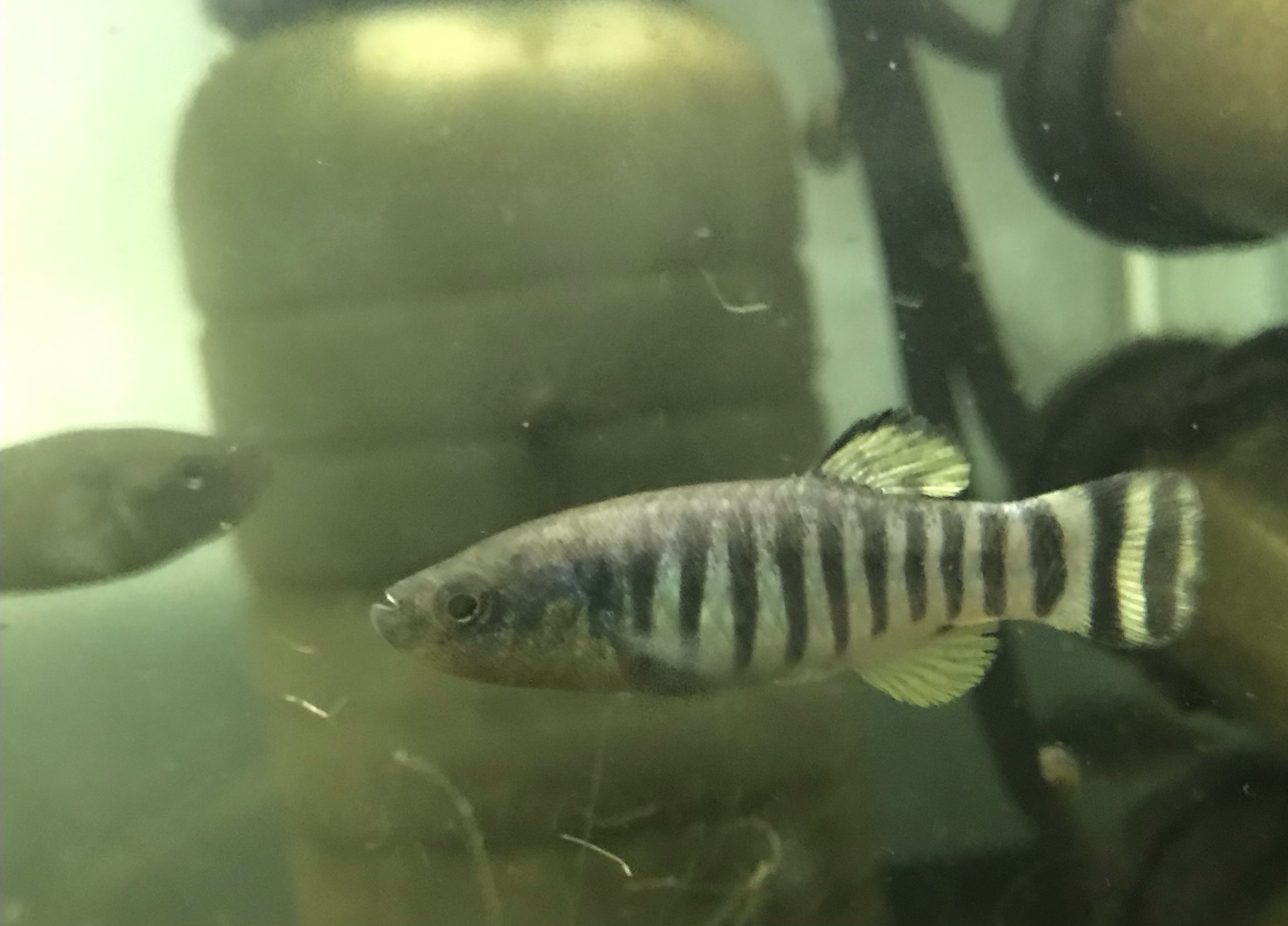
Photo: Wikimedia Commons (CC) via https://en.wikipedia.org/wiki/Almiri_toothcarp
Overview
The Almiri Killifish is a small freshwater fish endemic to southeastern Spain, measuring approximately 3-5 centimeters in length. Males display distinctive blue-green coloration with dark vertical bars, while females are typically brownish with less pronounced markings. These fish are adapted to shallow, slow-moving waters and feed primarily on small invertebrates, algae, and organic detritus.
As secondary consumers, they play an important role in their aquatic ecosystems by controlling insect populations and serving as prey for larger fish and birds.
This species has an extremely restricted range, found only in the Almiri spring system and associated waterways in the Murcia region of Spain. The killifish inhabits shallow freshwater springs, pools, and slow-flowing streams with dense aquatic vegetation and muddy or sandy substrates.
The primary threats to the Almiri Killifish include habitat degradation from agricultural runoff and water extraction for irrigation, which reduces water levels and quality in their spring habitats. Urban development and infrastructure projects have further fragmented their already limited range. Introduction of non-native fish species poses additional pressure through competition and predation.
Conservation efforts focus on habitat protection and water quality monitoring within the species' range. Local authorities have implemented some water use restrictions, and researchers are conducting population surveys to better understand the species' status and ecological requirements.
The outlook for the Almiri Killifish remains precarious due to its extremely limited distribution and ongoing habitat pressures. Without sustained conservation intervention and habitat protection, this endemic species faces continued risk of extinction.
Based on the available information, the specific threats facing the Almiri Killifish have not yet been formally assessed or documented by researchers. Without a proper threat assessment, it's unclear what dangers this species may be facing in its natural habitat. The status of whether threats are increasing, stable, or decreasing cannot be determined until a comprehensive evaluation is completed.
Habitat
Other threatened species in Cyprinodontidae


Threatened in Greece
Frequently asked questions
Why is Almiri Killifish classified as Critically Endangered?
Where does Almiri Killifish live?
What are the main threats to Almiri Killifish?
Get weekly conservation intelligence
One short digest a week of the most striking species and country data we ship, plus breaking conservation news paired with our database where it matters.
Free, no spam. One-click unsubscribe in every email.