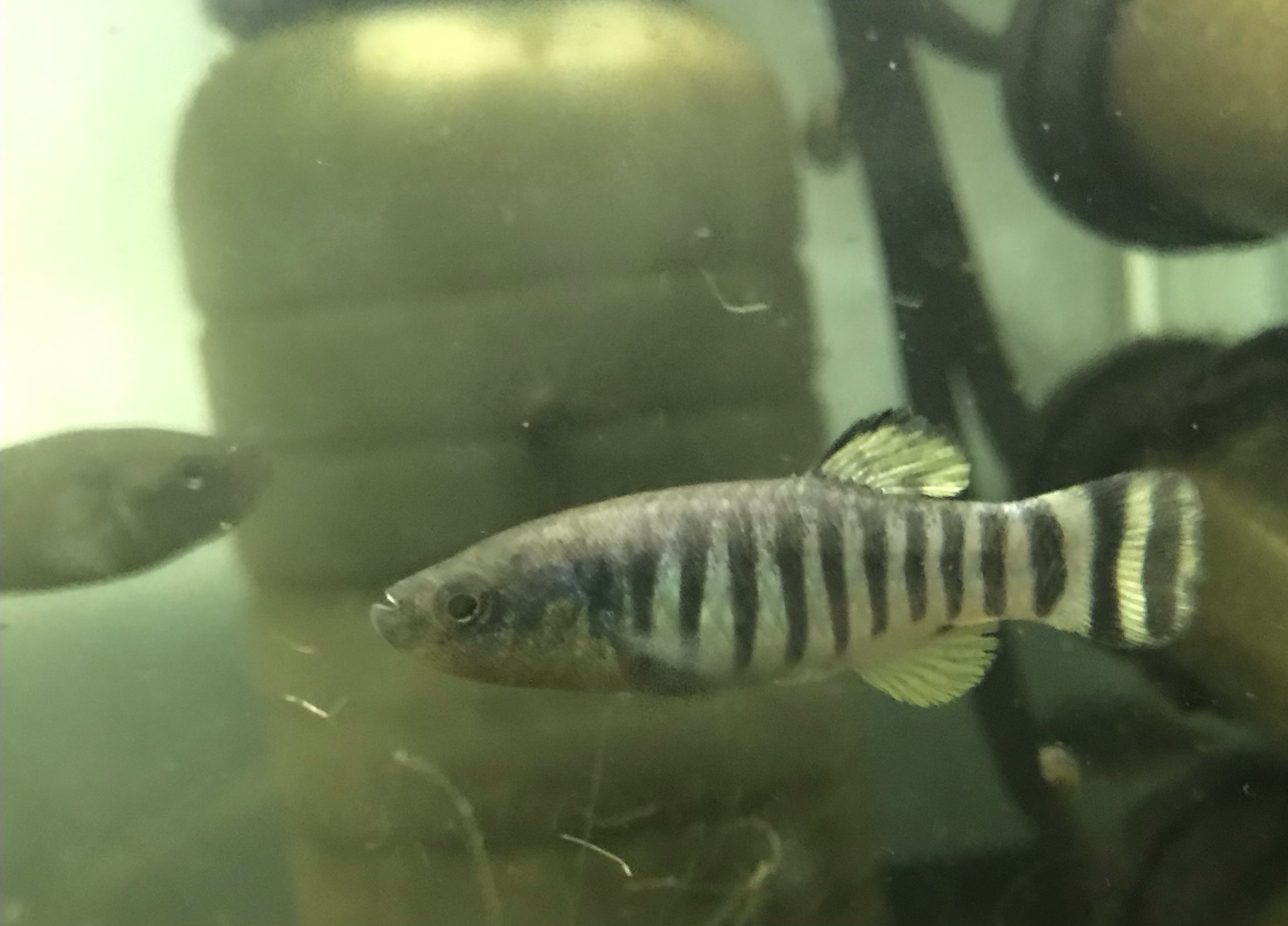
Azraq Killifish
Aphanius sirhani
Photo: Wikimedia Commons (CC) via https://en.wikipedia.org/wiki/Aphaniops_sirhani
Overview
The Azraq Killifish (Aphanius sirhani) is a small, robust freshwater fish endemic to the Azraq Oasis in eastern Jordan, representing one of the most geographically restricted fish species in the Middle East. This diminutive cyprinodontid typically measures 3-5 centimeters in length, with males displaying more vibrant coloration during breeding season, featuring silvery-blue flanks with darker vertical bars and orange-tinged fins. Females are generally more subdued in coloration with a brownish-olive hue.
The species inhabits the unique spring-fed pools and marshlands of the Azraq Wetland Reserve, where it has adapted to the specific water chemistry and temperature conditions of this desert oasis ecosystem. Historically, these fish thrived in the extensive wetland system that once covered over 12,000 hectares, but their range has contracted dramatically to small remnant pools. The Azraq Killifish is classified as Critically Endangered by the IUCN, reflecting its extremely limited distribution and severe population decline.
The species exhibits remarkable resilience to salinity fluctuations and temperature variations, adaptations that have allowed small populations to persist in increasingly challenging conditions. Conservation efforts have intensified in recent years, with the Royal Society for the Conservation of Nature in Jordan implementing habitat restoration projects and establishing captive breeding programs. The Azraq Wetland Reserve's designation as a Ramsar site has provided additional protection, and recent water management improvements have begun to restore some of the oasis's natural hydrology, offering hope for this endemic species' recovery.
The primary threat to Aphanius sirhani stems from severe water extraction for agricultural and municipal use, which has reduced the Azraq Oasis from a vast wetland system to isolated spring pools over the past four decades. Groundwater pumping has lowered the water table dramatically, causing many springs to dry completely and fragmenting the remaining habitat into disconnected refugia. Additionally, water quality degradation from agricultural runoff and increased salinity due to reduced freshwater input have further stressed the remaining populations.
Habitat
Aphanius sirhani inhabits shallow, spring-fed pools and slow-flowing channels within the Azraq Oasis wetland system in Jordan's eastern desert. These fish prefer areas with dense aquatic vegetation, moderate salinity levels, and stable water temperatures maintained by artesian spring flow.
Other threatened species in Cyprinodontidae


Threatened in Jordan


Frequently asked questions
Why is Azraq Killifish classified as Critically Endangered?
Where does Azraq Killifish live?
What are the main threats to Azraq Killifish?
Get weekly conservation intelligence
One short digest a week of the most striking species and country data we ship, plus breaking conservation news paired with our database where it matters.
Free, no spam. One-click unsubscribe in every email.