
Adriatic Sturgeon
Acipenser naccarii
Photo: Photo: Wikimedia Commons, CC BY-SA
Overview
Adriatic Sturgeon (Acipenser naccarii)
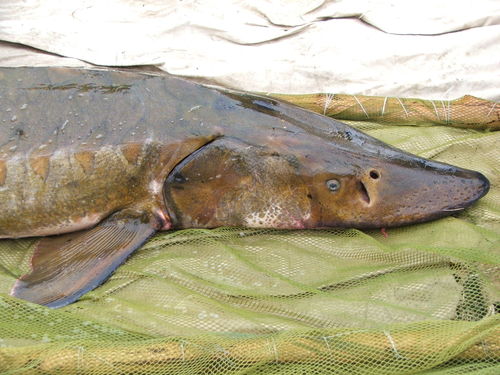
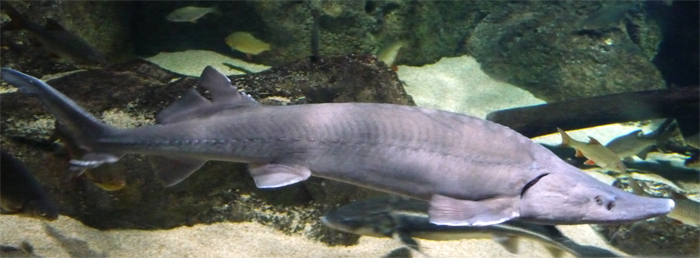
The Adriatic sturgeon is a large anadromous fish that can reach lengths of up to 2 meters and weights exceeding 40 kilograms. Distinguished by its elongated body, five rows of bony scutes, and distinctive barbels near its mouth, this species feeds primarily on benthic invertebrates, small fish, and crustaceans. As a slow-growing, late-maturing species that can live over 40 years, it plays a crucial role as both predator and prey in aquatic ecosystems.
Historically, the Adriatic sturgeon inhabited the Adriatic Sea and its major river systems, including the Po, Adige, and rivers along the eastern Adriatic coast in the Balkans. The species migrated from marine environments to freshwater rivers for spawning, requiring both habitat types throughout its life cycle.
The species faces near-extinction due to multiple anthropogenic pressures. River regulation and dam construction have blocked traditional spawning routes and altered flow regimes essential for reproduction. Overfishing, particularly for caviar production, severely depleted populations throughout the 20th century. Water pollution and habitat degradation in both marine and freshwater environments have further compromised survival and reproduction.
Conservation efforts include captive breeding programs in Italy and other range countries, with some facilities maintaining broodstock for potential reintroduction. Habitat restoration projects aim to improve river connectivity and water quality in historical spawning areas. International cooperation through various European conservation frameworks supports research and protection measures.
The current outlook remains precarious, with wild populations potentially extinct or reduced to critically low numbers. Recovery depends entirely on successful captive breeding programs and substantial habitat restoration efforts.
Based on the provided threat data, the specific threats to Adriatic sturgeon have not been assessed or documented in detail. Without this threat assessment information, it's not possible to describe the particular dangers facing this species or determine whether these threats are getting worse, staying the same, or improving over time.
Habitat
Conservation measures underway
Other threatened species in ACIPENSERIDAE

Threatened in Albania

Frequently asked questions
Why is Adriatic Sturgeon classified as Critically Endangered?
Where does Adriatic Sturgeon live?
What are the main threats to Adriatic Sturgeon?
Get weekly conservation intelligence
One short digest a week of the most striking species and country data we ship, plus breaking conservation news paired with our database where it matters.
Free, no spam. One-click unsubscribe in every email.