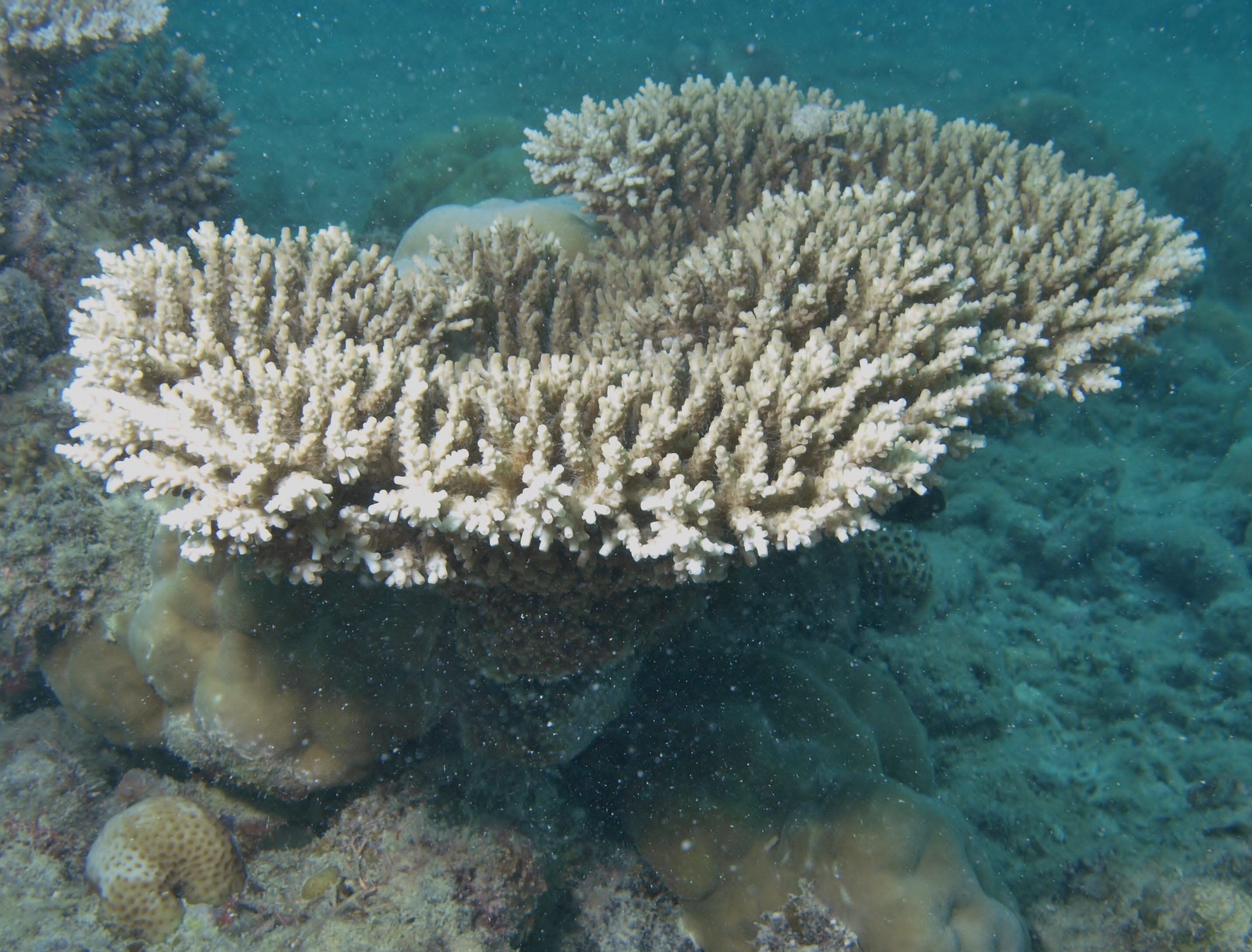
Acropora microclados
Photo: Wikimedia Commons (CC) via https://en.wikipedia.org/wiki/Acropora_microclados
Overview
Acropora microclados is a stony coral belonging to the family Acroporidae, known for its branching growth form typical of the genus, with colonies forming arborescent or corymbose structures that provide three-dimensional habitat complexity on reef substrates. Like other Acropora species, it relies on symbiotic zooxanthellae for energy through photosynthesis and reproduces via broadcast spawning, contributing to reef framework building and offering shelter for numerous invertebrate and fish species.
The species occurs in marine neritic waters across the Indo-Pacific, with recorded populations in Australia, Thailand, Taiwan, China, Japan, and the western Indian Ocean including Comoros and Mayotte. It typically inhabits shallow reef environments where light penetration supports its symbiotic algae.
This coral faces a wide array of ongoing pressures. Coastal mining and quarrying degrade reef substrate and increase sedimentation, while fishing and harvesting activities damage reef structure and disrupt associated fauna. Recreational activities, including diving and boating, cause physical damage.
Water quality is compromised by domestic and urban wastewater, agricultural runoff, and pollution from non-timber crop cultivation. Invasive species, coral diseases, and outbreaks of native predators such as crown-of-thorns starfish add further stress. Storms, flooding, and broader habitat shifting linked to climate change compound these impacts, alongside fire and fire suppression effects on adjacent terrestrial runoff patterns.
Conservation efforts include the species' listing under CITES Appendix II, inclusion in regional marine protected areas across its range states, and broader reef monitoring and water-quality management programs implemented by national environmental agencies. Coral reef restoration initiatives in several range countries also target Acropora species for propagation.
The population trend is decreasing, and the species is currently assessed as Endangered, reflecting cumulative and continuing pressure from habitat degradation, pollution, and climate-related disturbances across its range.
This coral is threatened by pollution from sewage, farm runoff, and unclear industrial sources, as well as physical damage from mining, quarrying, and human recreational activities like boating or diving. It also faces harm from overfishing and harvesting, invasive species, disease outbreaks, and destructive weather events such as storms and flooding, all of which can damage or destroy reef habitat. Based on the ongoing and wide-ranging nature of these threats, the overall pressure on this species appears to be stable to intensifying rather than decreasing.
Habitat
Conservation measures underway
Other threatened species in ACROPORIDAE

Threatened in Australia
Frequently asked questions
Why is Acropora microclados classified as Endangered?
Where does Acropora microclados live?
What are the main threats to Acropora microclados?
Get weekly conservation intelligence
One short digest a week of the most striking species and country data we ship, plus breaking conservation news paired with our database where it matters.
Free, no spam. One-click unsubscribe in every email.