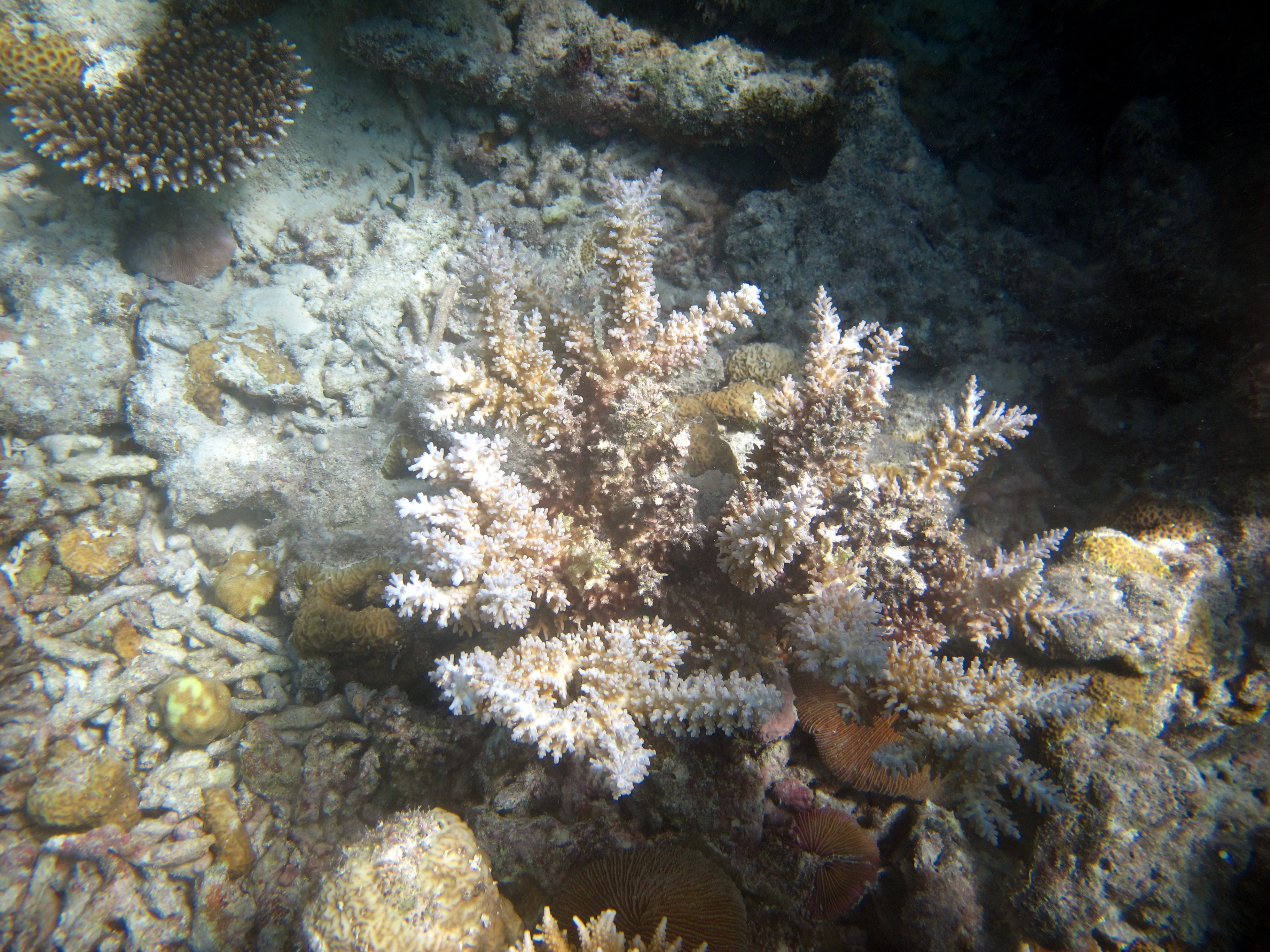
Acropora echinata
Photo: Wikimedia Commons (CC) via https://en.wikipedia.org/wiki/Acropora_echinata
Overview
Acropora echinata is a stony coral in the family Acroporidae, distinguished by its finely branching, corymbose to arborescent growth form, with short, tapering branchlets radiating outward. Like other Acropora species, it is a colonial organism built from thousands of tiny polyps that secrete calcium carbonate skeletons, gradually constructing the complex three-dimensional reef structures that shelter fish, invertebrates, and other marine life. It relies on symbiotic zooxanthellae algae for the bulk of its energy, obtained through photosynthesis, supplemented by capturing plankton with its tentacles at night.
As a fast-growing branching species, it contributes significantly to reef framework building and habitat complexity.
The species occurs across parts of the Indo-Pacific, including Australia, Japan, China, India, Palau, and Kiribati, inhabiting shallow marine neritic zones and coastal reef environments, generally in clear, current-swept waters typical of reef slopes and lagoons.
Its population is declining due to a wide array of pressures: coral mining and quarrying, destructive fishing and harvesting practices, recreational activities such as diving and anchoring, disease outbreaks and invasive species, coral predators, and pollution from urban wastewater and agricultural runoff. Habitat alteration, storms, flooding, and fire-related land-use changes compound these stresses, while rising sea temperatures increase susceptibility to bleaching.
Conservation efforts include its listing under CITES Appendix II, inclusion in marine protected areas across parts of its range, and reef monitoring and restoration programs in several countries. Water quality management and fishing regulations are being applied in some jurisdictions.
Given the breadth and persistence of ongoing threats, the species' trajectory remains one of continued decline, consistent with its Endangered status.
This coral faces damage from coastal activities like mining, fishing, and recreational use (such as boating or diving), along with pollution from sewage, farm runoff, and other waste entering the water. It's also threatened by diseases, competition from invasive species, and climate-related pressures like storms, flooding, and shifting ocean conditions, as well as fires affecting nearby land. Since all these threats are currently listed as ongoing with no signs of easing, the overall pressure on this species appears to be stable to intensifying rather than decreasing.
Habitat
Conservation measures underway
Other threatened species in ACROPORIDAE

Threatened in Australia
Frequently asked questions
Why is Acropora echinata classified as Endangered?
Where does Acropora echinata live?
What are the main threats to Acropora echinata?
Get weekly conservation intelligence
One short digest a week of the most striking species and country data we ship, plus breaking conservation news paired with our database where it matters.
Free, no spam. One-click unsubscribe in every email.