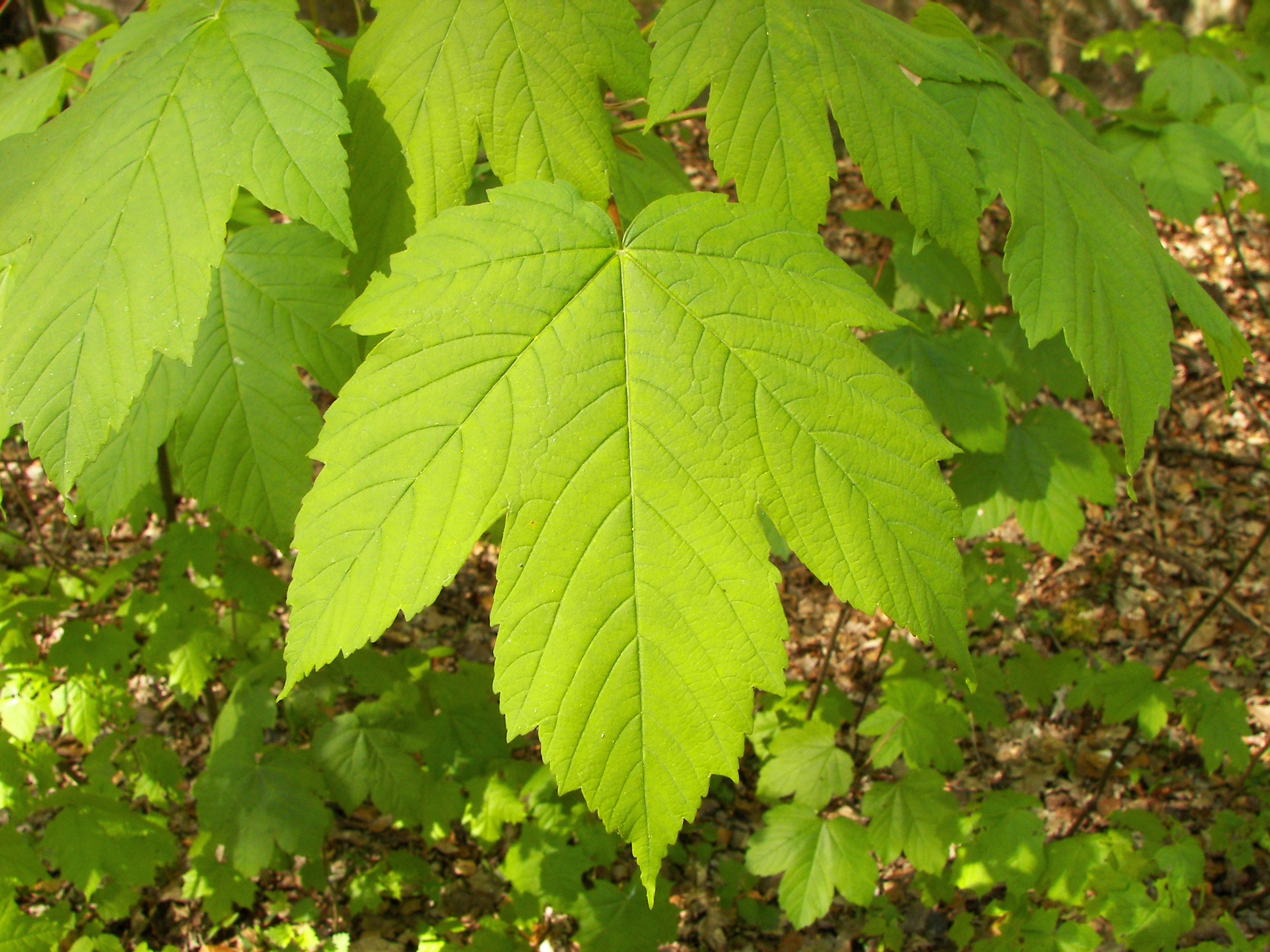
Acer hilaense
Photo: Wikimedia Commons (CC) via https://en.wikipedia.org/wiki/Maple
Overview
Acer is a genus of trees and shrubs commonly known as maples. The genus is placed in the soapberry family Sapindaceae. There are approximately 132 species, most of which are native to East Asia, with a number also appearing in Europe, northern Africa, and North America.
Only one species, Acer laurinum, extends to the Southern Hemisphere. The type species of the genus is the sycamore maple Acer pseudoplatanus, one of the most common maple species in Europe. Most maples have easily identifiable palmate leaves and all share distinctive winged fruits.
The closest relative of the maples is the small east Asian genus Dipteronia, followed by the more widespread genus Aesculus. Maple syrup is made from the sap of some maple species. It is one of the most common genera of trees in Asia.
Many maple species are grown in gardens where they are valued for their autumn colour and often decorative foliage, some also for their attractive flowers, fruit, or bark.
Acer hilaense faces severe population decline due to its extremely restricted range in the mountainous regions of China, where habitat destruction from agricultural expansion and infrastructure development has fragmented remaining populations. The species is particularly vulnerable to climate change impacts at high elevations, with shifting temperature and precipitation patterns threatening its specialized montane habitat requirements. Overcollection for horticultural purposes has further reduced wild populations of this rare maple.
Habitat
Acer hilaense inhabits montane forests and rocky slopes at high elevations in the mountainous regions of China. The species typically grows in cool, moist conditions on steep terrain with well-drained soils, often associated with other endemic montane flora.
Conservation measures underway
Other threatened species in SAPINDACEAE
Threatened in China
Frequently asked questions
Why is Acer hilaense classified as Critically Endangered?
Where does Acer hilaense live?
What are the main threats to Acer hilaense?
Get weekly conservation intelligence
One short digest a week of the most striking species and country data we ship, plus breaking conservation news paired with our database where it matters.
Free, no spam. One-click unsubscribe in every email.