Nepal's 81 Endangered Species the IUCN Calls Safe
The Number That Shouldn't Exist
If you searched the global IUCN Red List for the Common Pintail or the Knob-billed Duck, you'd come away reassured. Neither species is considered globally threatened at a level that would trigger headlines. And yet, in the wetlands and floodplains of Nepal, national red list assessors have quietly flagged both — and 79 other species — as Critically Endangered or Endangered within the country's borders. The rest of the world calls them fine. Nepal is watching them disappear.
This is the paradox at the center of one of the least-discussed blind spots in conservation science: the gap between a global Red List category and a national one. Here is the data, drawn directly from SpeciesRadar's cross-referencing of IUCN global assessments against national red list records:
| Country | Species globally safe, locally critical |
|---|---|
| Nepal | 81 |
Key Finding: 81 species are listed as Critically Endangered or Endangered nationally but Least Concern (or Near Threatened / Data Deficient) globally — meaning the world doesn't notice them disappearing. Nepal carries 81 such species.
Eighty-one species. Not obscure invertebrates nobody has heard of — many are birds, mammals, and plants that Nepali conservationists see thinning out year after year, even as international databases file them under "no cause for concern."
Why a Global Rating Can Hide a Local Collapse
A global IUCN Red List assessment is, in essence, a population-wide average. It asks: across the entire range of this species — potentially spanning dozens of countries and continents — is the overall trend stable, declining, or improving? A duck that migrates from Siberia to South Asia and back can be doing perfectly well in Russia and China while its Himalayan wintering grounds are drained, ploughed over, and built upon. The global number smooths over that entirely.
A national assessment does something different. It asks: what is happening to this population, in this country, right now, given this country's specific pressures? For Nepal, those pressures are concentrated and severe — wetland conversion to agriculture, unregulated hunting along migratory flyways, and the loss of the lowland Terai habitats that many of these species depend on for wintering or breeding.
The Common Pintail: A Textbook Case
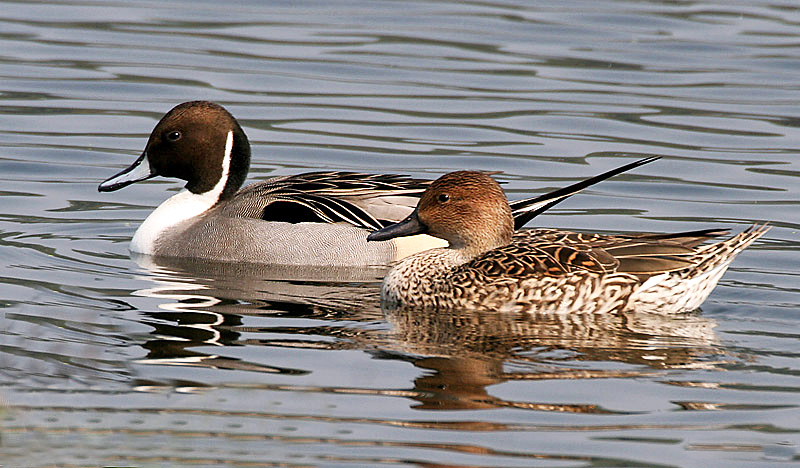
The Common Pintail is one of the clearest illustrations of this divergence. Globally, its numbers are large enough that the species carries a Vulnerable rating overall — already a signal of concern, but not alarm. In Nepal, however, national assessors have placed the same species in a far graver category, reflecting steep local declines tied to wetland drainage and hunting pressure along the country's river systems. Call it the Common Pintail (locally CR, globally LC-leaning) problem: the bird that's "vulnerable but manageable" on paper is vanishing from the marshes where Nepali birdwatchers used to count it by the hundreds.
The Knob-billed Duck's Quiet Retreat
The Knob-billed Duck, globally listed as Endangered, shows the same pattern in a different key. Its broader Asian and African range keeps the global number from collapsing, but in Nepal's degraded floodplain wetlands, sightings have grown sparse enough to warrant the country's most urgent national classification. It is, in effect, a species being locally erased while the global ledger still shows it holding on elsewhere.
Why This Matters Beyond Nepal
This isn't a Nepal-specific quirk — it's a structural feature of how global conservation assessment works, and it plays out wherever a species' range straddles both resilient strongholds and rapidly degrading margins.
- Migratory waterbirds are disproportionately affected, because their global populations can appear stable even as individual stopover or wintering countries lose the wetlands that sustain them.
- Range-edge populations — species at the margin of their distribution — often show the sharpest local declines, since edge habitats are usually the first converted for agriculture or development.
- National red lists, drawing on local field data GBIF and the IUCN's global process can't capture at the same resolution, catch declines years before they show up in a global reassessment.
- Conservation funding and protective legislation are frequently triggered by global status, meaning genuinely collapsing local populations can miss out on both.
A species doesn't go extinct on a spreadsheet — it goes extinct in a specific wetland, on a specific river bend, one breeding season at a time. Nepal's 81 divergent species are a warning that the spreadsheet is running behind reality.
What Conservationists Are Doing About the Gap
Recognizing this blind spot is the first step toward closing it, and Nepali conservation bodies are increasingly using national assessments as an early-warning system rather than a footnote to the global one.
- National red list processes are being run on shorter cycles in several countries, allowing faster detection of local collapses.
- Wetland protection initiatives in the Terai region are targeting the same floodplain habitats that support both the Common Pintail and Knob-billed Duck during migration.
- Cross-border monitoring along flyways is improving, helping researchers separate genuine global recovery from a shell game where declines simply relocate.
- Data-sharing between national agencies and global bodies like the IUCN Red List is slowly tightening the feedback loop between local field observations and global category reviews.
Related on SpeciesRadar: Adonis' Ladybird (EN).
Frequently Asked Questions
What does "globally Least Concern but nationally Critically Endangered" mean?
It means a species' overall worldwide population is considered stable or abundant enough to avoid a threatened global rating, while within a specific country its population has collapsed severely enough to warrant the highest national concern categories.
Why doesn't the IUCN Red List just use the national numbers?
The global Red List assesses a species across its entire range, since local declines in one country can be offset by stability or growth elsewhere; national red lists exist precisely to capture what a global average obscures.
Are the Common Pintail and Knob-billed Duck actually at risk of disappearing from Nepal?
National assessments suggest sharply declining local populations driven by wetland loss and hunting pressure, which is why Nepali red list bodies have classified them at a much higher risk level than the global assessment does.
How many species show this pattern in Nepal?
SpeciesRadar's cross-referencing of national and global assessments identifies 81 species in Nepal that are Critically Endangered or Endangered nationally while rated Least Concern, Near Threatened, or Data Deficient globally.
Does this pattern exist in other countries too?
Yes — the mechanism (range-edge populations declining while the global range stays stable) applies wherever a widely distributed species has a shrinking foothold in one particular nation, and SpeciesRadar's ongoing methodology work is tracking this beyond Nepal as well.
Sources: Knob-billed Duck on Wikipedia · IUCN Red List
Data sourced from SpeciesRadar (speciesradar.org), drawing on IUCN Red List 2025-2, GBIF, and national red list assessments from 200+ countries. Full details of how these figures are calculated are available in our Methodology.
The Case for Watching Both Numbers
The lesson from Nepal's 81 divergent species isn't that the global Red List is wrong — it's that it answers a different question than the one most people assume it answers. A "Least Concern" label tells you a species is fine somewhere. It doesn't tell you it's fine here. For conservationists, birdwatchers, and policymakers working within a single country's borders, the national assessment is often the more urgent and more actionable number.
There's real reason for hope in how this gap is being addressed: better-resourced national red list programs, stronger wetland protections in Nepal's Terai lowlands, and closer collaboration between local scientists and global bodies are steadily narrowing the blind spot. Species like the Common Pintail and the Knob-billed Duck still have time to rebound in Nepal if the habitats they depend on are safeguarded now, before a local decline becomes a local extinction. Explore the full extinction crisis pillar on SpeciesRadar to see how these national-versus-global divergences are reshaping what "safe" really means — and use our species explorer to check whether a species you care about is quietly slipping through the same crack.
Get weekly conservation intelligence
One short digest a week of the most striking species and country data we ship, plus breaking conservation news paired with our database where it matters.
Free, no spam. One-click unsubscribe in every email.