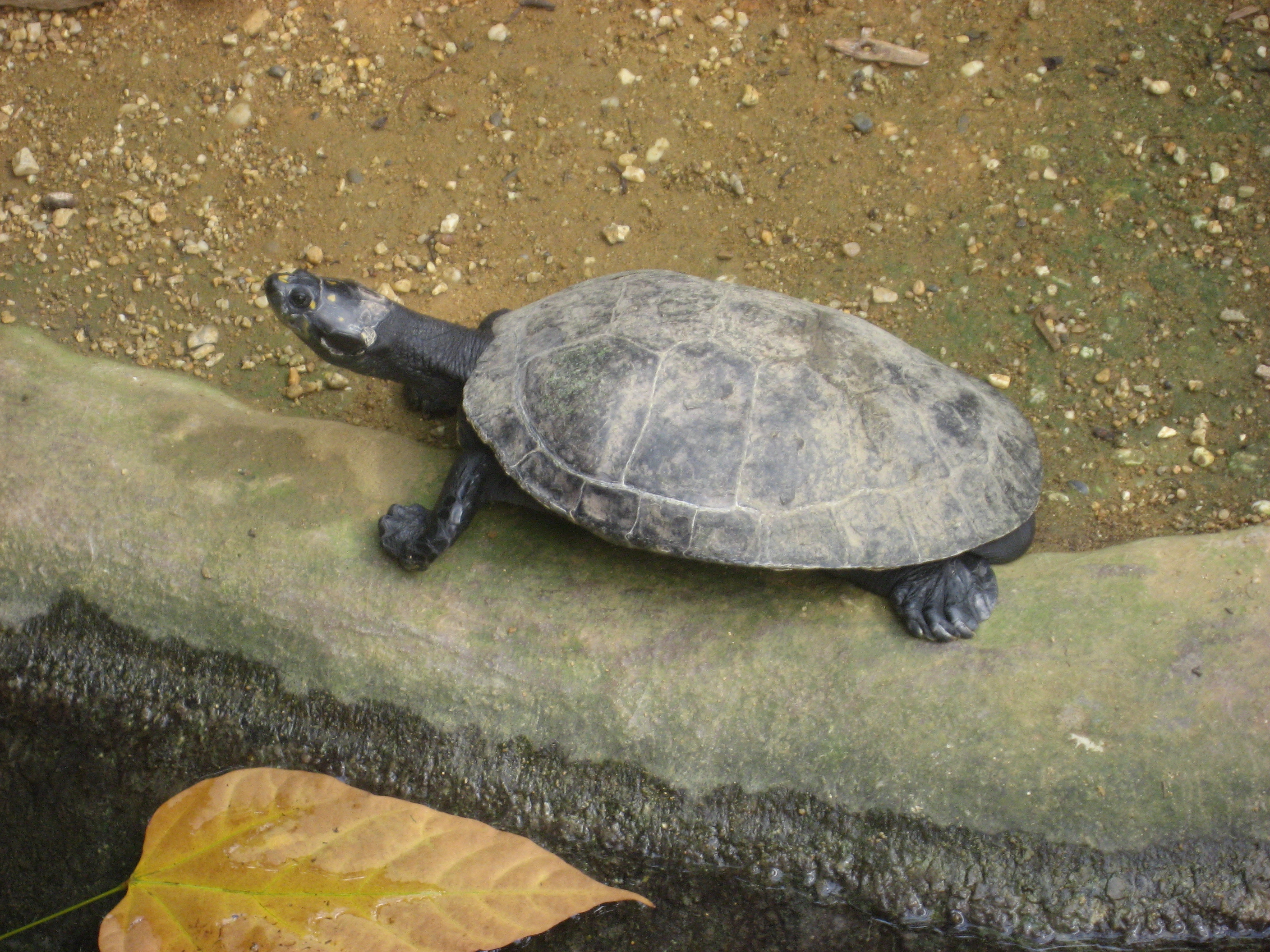
Podocnemis unifilis
Photo: Wikimedia Commons (CC) via https://en.wikipedia.org/wiki/Yellow-spotted_river_turtle
Overview
A detailed profile for this species is sourced from the IUCN Red List of Threatened Species as assessments become available.
The Yellow-spotted River Turtle faces severe pressure from overexploitation for its meat and eggs, which are highly valued in local markets throughout the Amazon basin. Nest harvesting is particularly devastating, with collection rates often exceeding 90% in accessible areas. Habitat degradation from deforestation, mining, and dam construction further fragments populations and reduces nesting beach quality.
Habitat
This species inhabits slow-moving rivers, oxbow lakes, and flooded forests throughout the Amazon and Orinoco river basins. It prefers areas with sandy beaches for nesting and abundant aquatic vegetation for feeding.
Conservation measures underway
Other threatened species in PODOCNEMIDIDAE

Frequently asked questions
Why is Podocnemis unifilis classified as Vulnerable?
Where does Podocnemis unifilis live?
What are the main threats to Podocnemis unifilis?
Get weekly conservation intelligence
One short digest a week of the most striking species and country data we ship, plus breaking conservation news paired with our database where it matters.
Free, no spam. One-click unsubscribe in every email.