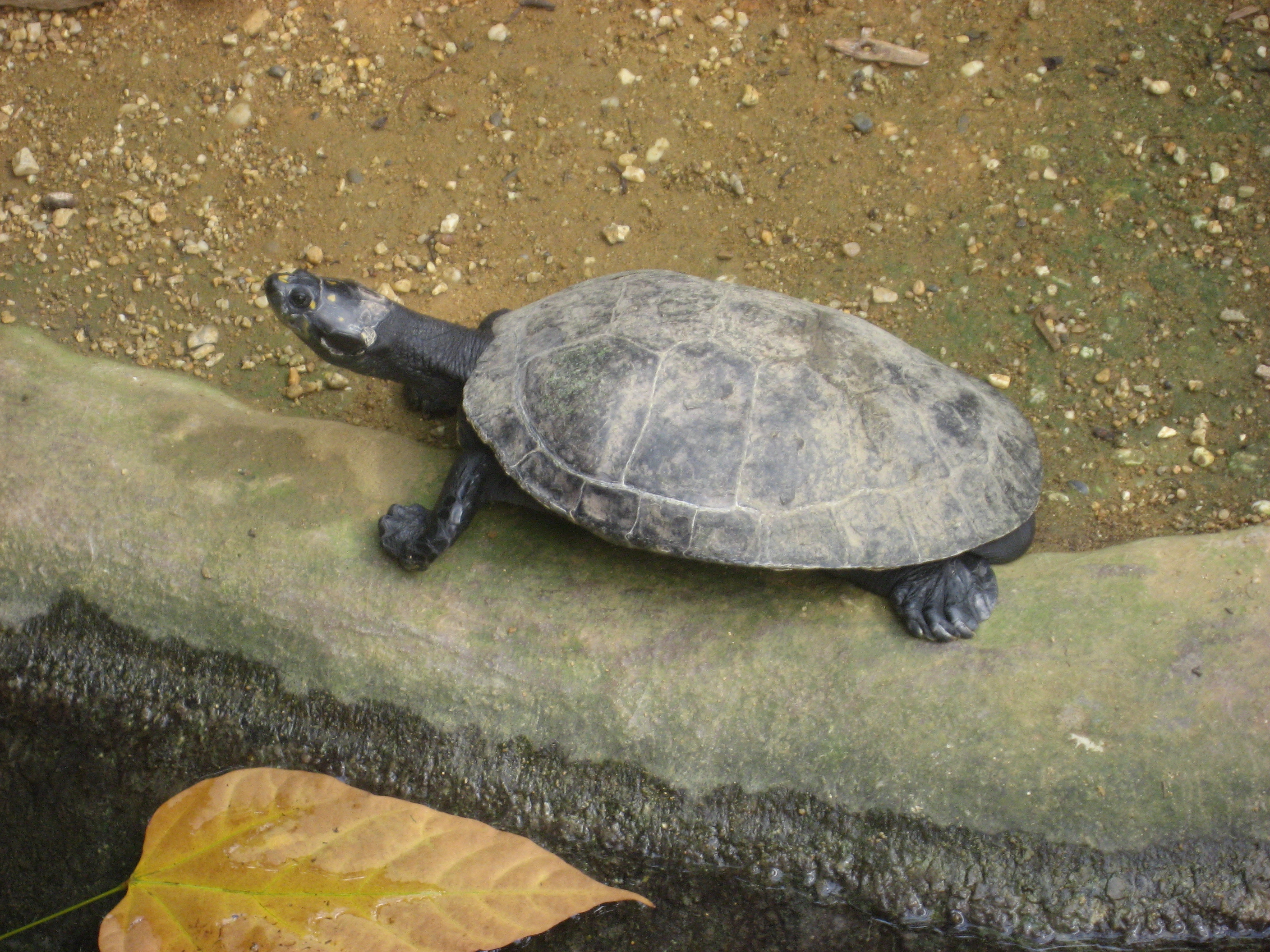
Peltocephalus dumerilianus
Overview
A detailed profile for this species is sourced from the IUCN Red List of Threatened Species as assessments become available.
Peltocephalus dumerilianus faces severe pressure from overexploitation for the international pet trade, where its distinctive appearance makes it highly sought after by collectors. Habitat degradation in the Amazon basin through deforestation and agricultural expansion further restricts available nesting beaches and foraging areas. Dam construction along major river systems disrupts seasonal flooding patterns essential for the species' reproductive cycle and food availability.
Habitat
This freshwater turtle inhabits slow-moving rivers, oxbow lakes, and flooded forests throughout the Amazon basin. It prefers areas with sandy or muddy substrates for nesting and abundant aquatic vegetation for foraging.
Conservation measures underway
Other threatened species in PODOCNEMIDIDAE

Frequently asked questions
Why is Peltocephalus dumerilianus classified as Vulnerable?
Where does Peltocephalus dumerilianus live?
What are the main threats to Peltocephalus dumerilianus?
Get weekly conservation intelligence
One short digest a week of the most striking species and country data we ship, plus breaking conservation news paired with our database where it matters.
Free, no spam. One-click unsubscribe in every email.